FIVE CARDS. FIVE STORIES. ONE LEGACY.
Some lessons cannot be learned at the beginning. They arrive through experience. Through finding another way. Through interruption. Through what comes after success. Through understanding what experience has taught us. Through discovering that progress rarely moves in a straight line.
Five players. Five very different careers. Jim Abbott. Jim Eisenreich. Orel Hershiser. Bob Tewksbury. Bret Saberhagen. Their cards capture moments from baseball. Their stories reveal something larger.
ADAPT. CONTINUE. AFTER. UNDERSTAND. UNEVEN. Together, they ask us to look beyond what these players accomplished — and toward what their journeys came to teach. Because perhaps wisdom isn't something we begin with. Perhaps it's what the journey leaves with us.
The five stories
Chapter 1 · Jim Abbott — ADAPT
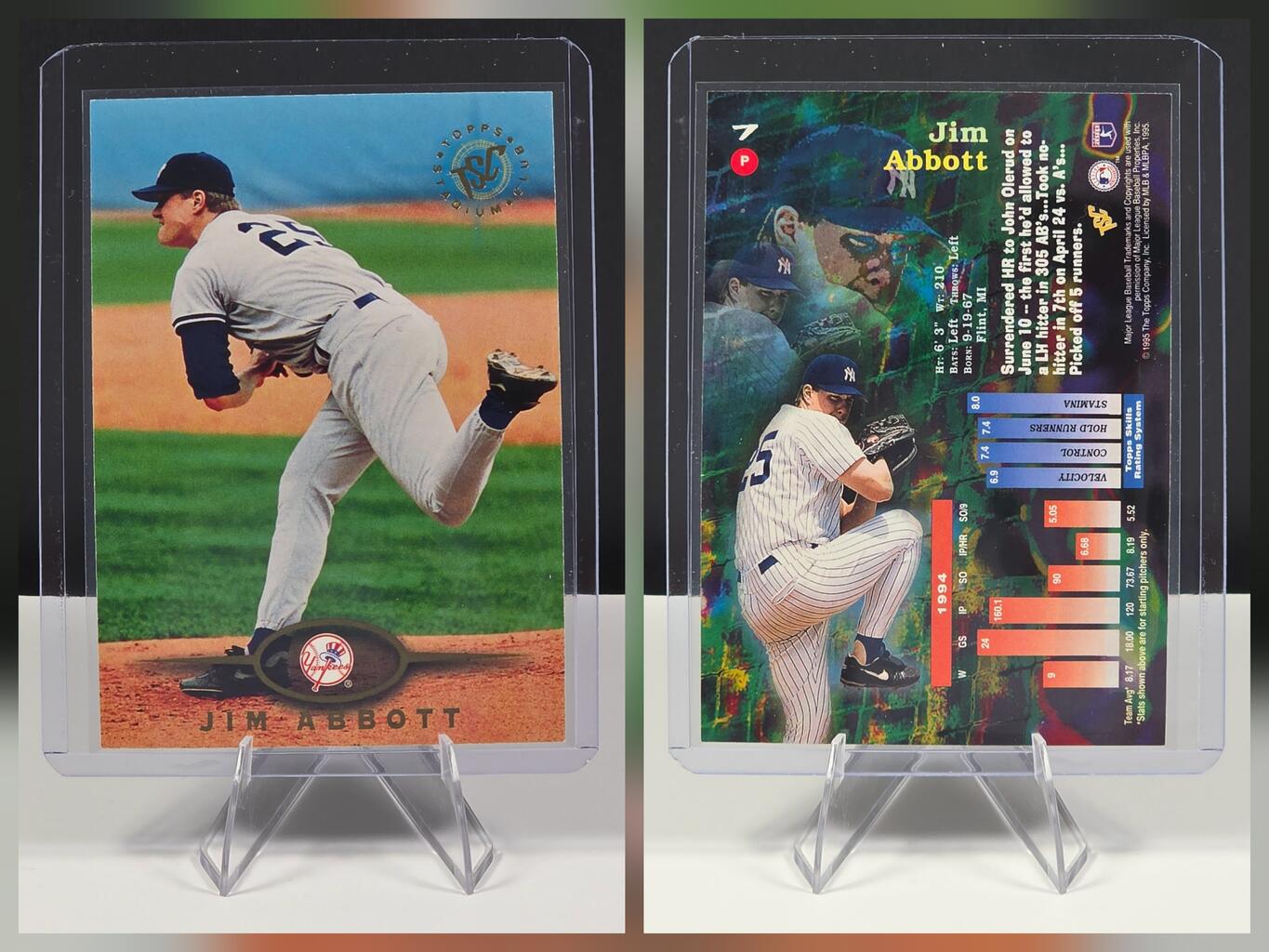
Some differences are impossible to hide.
Jim Abbott was born without a right hand.
When he stepped onto a baseball field, everyone could see it.
But Abbott learned something early: He didn't need to play the game exactly like everyone else. He needed to find a way that worked for him.
FIND YOUR WAY
Abbott pitched with his left hand.
After releasing the ball, he quickly slipped a glove onto that same hand so he could field. If he needed to throw, he transferred the glove again.
It sounds complicated. For Abbott, it became baseball.
And the method took him remarkably far.
He starred at the University of Michigan, represented the United States internationally and was selected 8th overall by the California Angels in the 1988 MLB Draft.
Then came something even more unusual.
Abbott skipped the minor leagues and went directly to the majors in 1989.
By 1991, he finished third in American League Cy Young Award voting.
He had found his way.
But finding your way once doesn't mean you'll never have to adjust again.
ADAPT AGAIN
Abbott's career changed.
There were trades. Difficult seasons. Eventually, the pitcher who had once skipped the minors was sent there.
Think about that.
He had already proven he belonged in the major leagues. Now he had to find his way back.
And he did.
His career would include one of baseball's unforgettable achievements: a no-hitter for the New York Yankees on September 4, 1993.
But perhaps the no-hitter isn't the most important part of this card.
👀 LOOK AT THE CARD AGAIN
You can see Abbott preparing to pitch.
You can't see all the adjustments that made that moment possible.
That's the part worth remembering.
Abbott didn't wait until he had the same tools as everyone else.
And when circumstances changed, he didn't assume the method that got him somewhere would always be the method that kept him there.
He adapted. Then, when necessary, he adapted again.
💎 HIDDEN GEM — ADAPT
You don't need the same tools as everyone else. You need to keep discovering what works with the ones you have.
💭 HIYASAT REFLECTION
Are you waiting for different circumstances — or discovering what you can do with the circumstances you already have?
Chapter 2 · Jim Eisenreich — CONTINUE
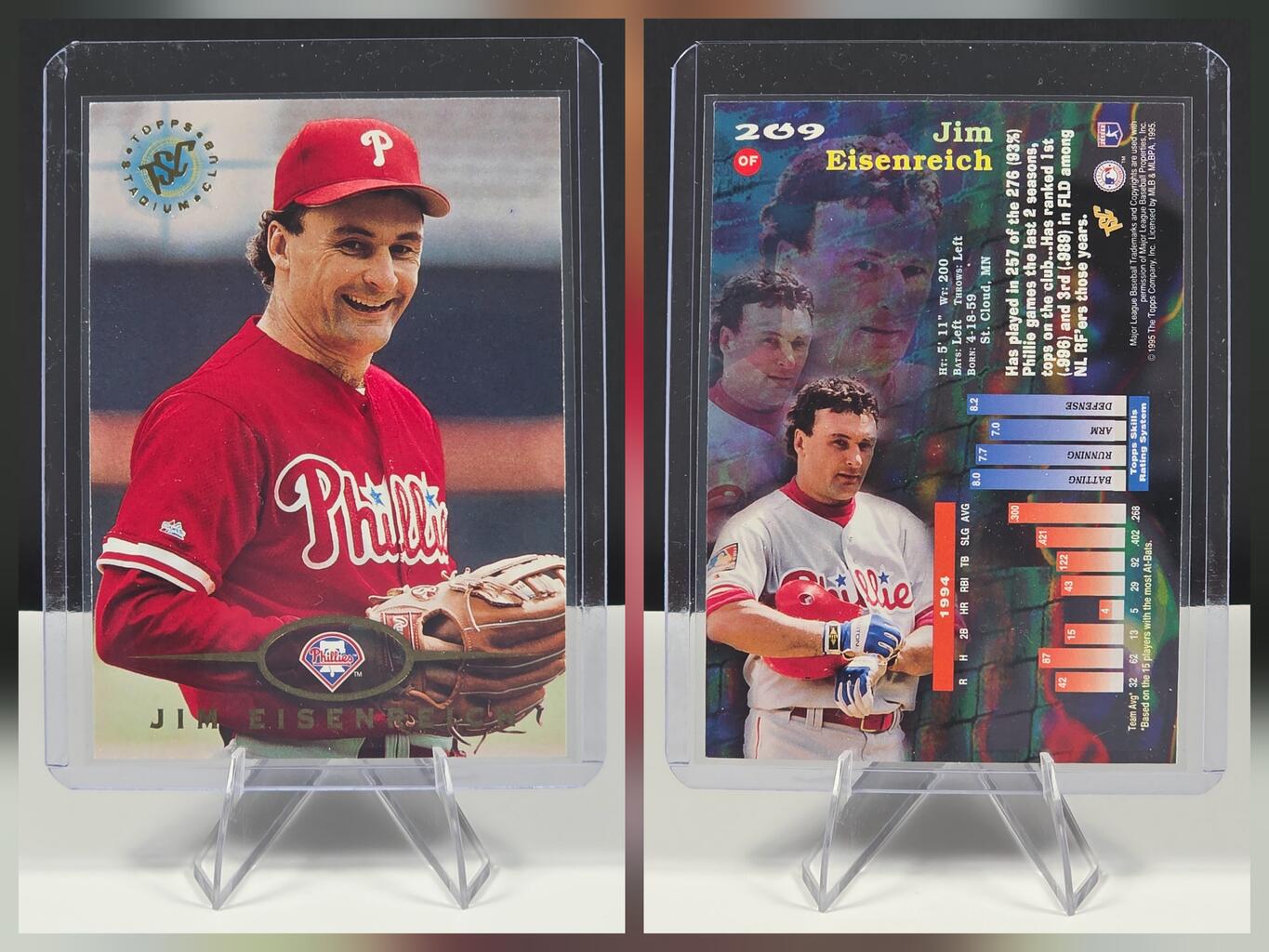
Sometimes a pause can look like an ending.
Jim Eisenreich reached the major leagues with the Minnesota Twins in 1982.
But his first years in baseball became complicated.
Eisenreich experienced involuntary movements and other symptoms during games. Crowds noticed. At times, the attention itself made competing more difficult.
Eventually, he stepped away from Major League Baseball.
If you stopped his story there, you might think baseball simply hadn't worked out.
You'd be very wrong.
THE YEARS BETWEEN
Eisenreich didn't play in the majors in 1985 or 1986.
Those missing seasons matter.
Because when we look backward at a finished career, it's easy to connect everything neatly.
Real life doesn't feel that way while you're living it.
During this period, Eisenreich gained greater understanding of what he was experiencing, eventually receiving a diagnosis of Tourette syndrome.
Then baseball opened again.
In 1987, Eisenreich returned to the major leagues with the Kansas City Royals.
But this wasn't simply a comeback appearance.
He stayed.
THERE WAS MORE
Eisenreich developed into a productive major-league hitter.
He played for Kansas City, Philadelphia, Florida and Los Angeles.
He appeared in the 1993 World Series with the Phillies.
Four years later, at 37, he helped the Florida Marlins win the 1997 World Series.
His final MLB season came in 1998.
Think about the distance between those dates.
1982, A difficult beginning., An interruption., 1987, A return.
Then more than a decade of major-league baseball still waiting ahead.
👀 LOOK AT THE CARD AGAIN
A baseball card freezes one season.
A life doesn't.
There may be chapters when progress disappears.
There may be years that don't look anything like the future you imagined.
Eisenreich's story doesn't promise that every interruption ends with a comeback.
It offers something quieter.
A pause does not always get to decide what happens next.
Sometimes there is still more story to live.
💎 HIDDEN GEM — CONTINUE
An interruption can become part of your story without becoming the end of it.
💭 HIYASAT REFLECTION
Have you mistaken a pause in your journey for proof that the journey was over?
Chapter 3 · Orel Hershiser — AFTER
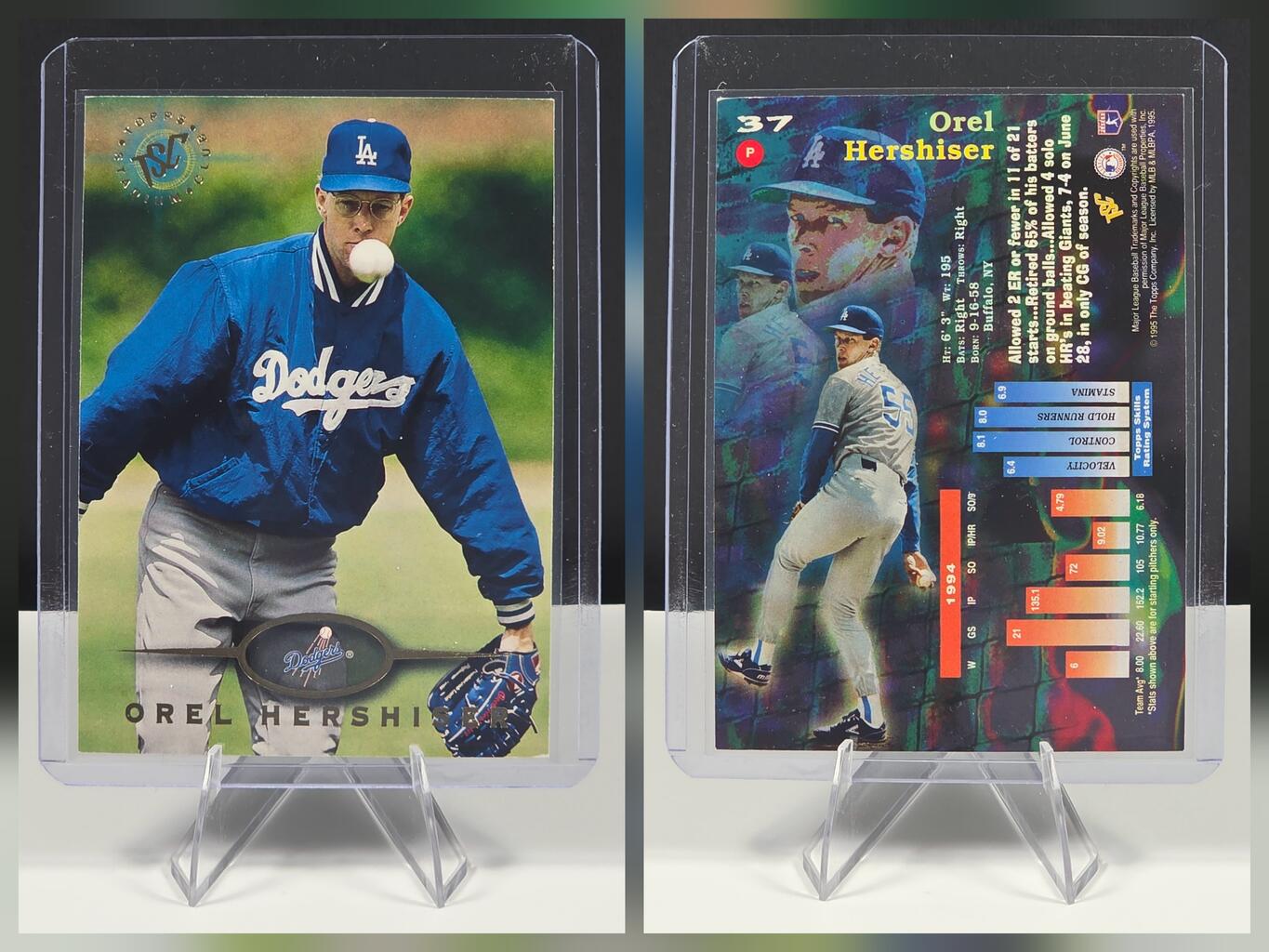
Some achievements become so large they follow you forever.
For Orel Hershiser, that year was 1988.
He didn't allow a run over his final 59 consecutive regular-season innings.
He won the National League Cy Young Award.
Then he helped carry Los Angeles through October, winning both the NLCS MVP and World Series MVP as the Dodgers became champions.
It was the kind of season athletes dream about.
Which creates an interesting question.
What do you do after you've already lived the chapter everyone will remember?
AFTER THE PEAK
Hershiser kept pitching.
Then, in 1990, his career changed dramatically.
He suffered a serious shoulder injury that required reconstructive surgery.
The pitcher who returned faced a different reality.
The historic streak was behind him. So was that perfect 1988 season.
He could not spend the rest of his career trying to live inside it.
There was still baseball to play.
SOMETHING DIFFERENT
Hershiser eventually left Los Angeles and joined Cleveland.
By then, he was no longer the young pitcher building toward 1988.
He was an experienced veteran.
And in 1995, another meaningful October arrived.
Hershiser helped Cleveland reach its first World Series in more than four decades.
He was named American League Championship Series MVP.
Seven years after the season that could have defined everything, there was another chapter worth remembering.
Not the same. It didn't need to be.
👀 LOOK AT THE CARD AGAIN
A card can capture an athlete at one moment.
Memory often does the same thing.
We remember Hershiser's streak. The Cy Young. The championship.
But a career continues after the photograph.
So does a life.
Sometimes our greatest chapter becomes dangerous when we start believing everything afterward must equal it.
Hershiser's career offers another possibility.
What comes after your best doesn't have to become your new best to still be meaningful.
💎 HIDDEN GEM — AFTER
You don't have to repeat your greatest chapter for the next one to matter.
💭 HIYASAT REFLECTION
Are you comparing the chapter you're living now with one you were never supposed to repeat?
Chapter 4 · Bob Tewksbury — UNDERSTAND
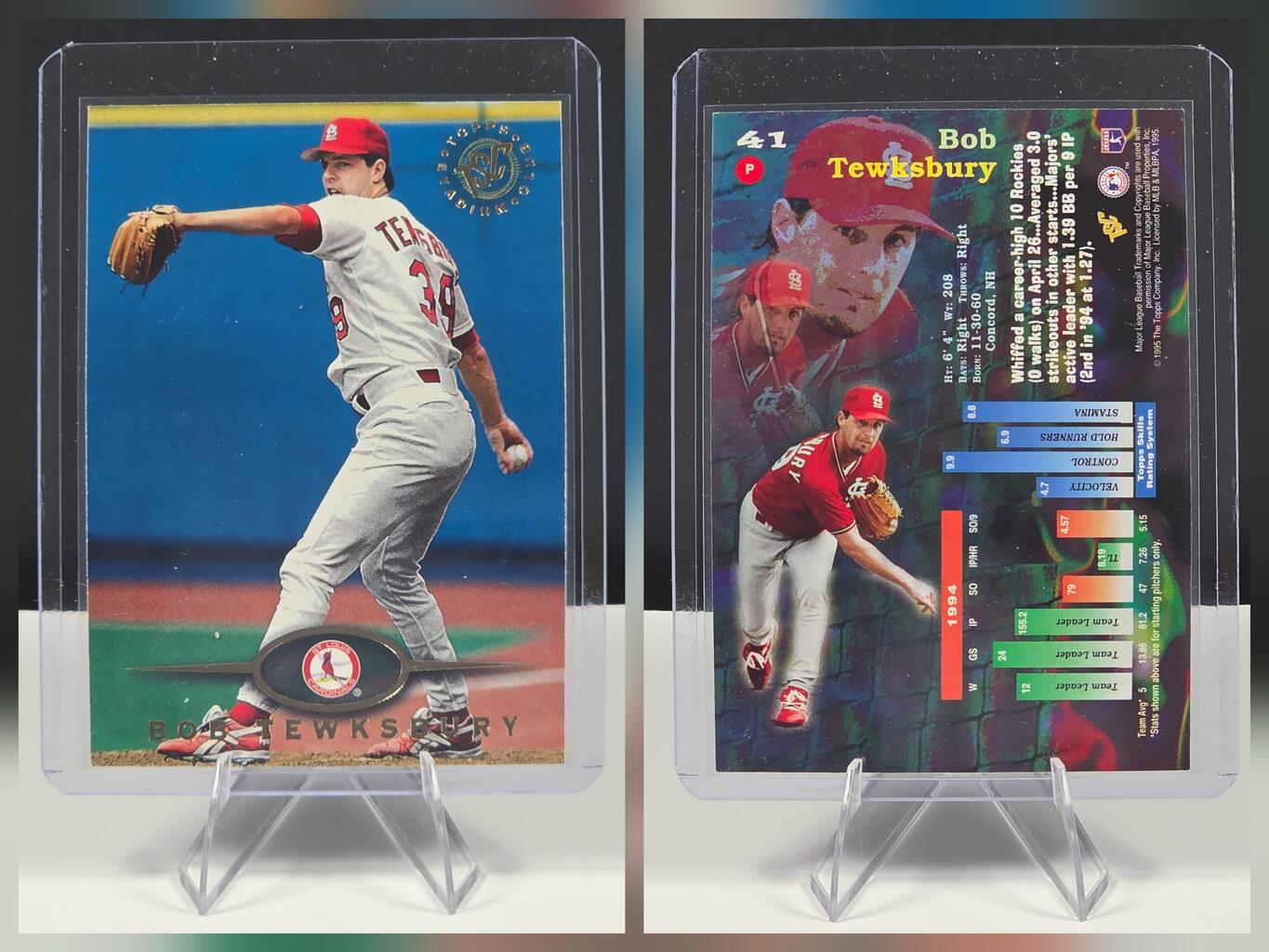
Baseball loves speed.
A fastball that explodes past a hitter is easy to notice.
Bob Tewksbury had to find another way.
He wasn't known for overpowering hitters.
So he learned to do something else exceptionally well.
Put the baseball where he wanted it.
WHEN POWER ISN'T YOUR POWER
Tewksbury reached the major leagues with the New York Yankees in 1986.
His path wasn't immediately secure.
There were different organizations and uncertainty before he established himself with the St. Louis Cardinals.
But Tewksbury developed a reputation for remarkable control.
He attacked hitters with location, movement and changing speeds.
In 1992, it all came together.
Tewksbury went 16–5, became an All-Star and finished third in National League Cy Young Award voting.
He had reached baseball's highest level without becoming the kind of pitcher people normally imagined when they thought about dominance.
His advantage wasn't obvious. It had been developed.
THEN HE KEPT LEARNING
Tewksbury's curiosity didn't disappear when his playing career ended.
He studied psychology and moved into the mental-performance side of sports.
Eventually, he worked with professional athletes as a mental skills coach.
The pitcher who once had to understand how to get hitters out was now helping athletes understand something else: themselves.
Pressure. Preparation. Performance.
The mental side of competing.
Suddenly, the two chapters don't seem completely separate.
👀 LOOK AT THE CARD AGAIN
The card shows a pitcher.
But perhaps we're also looking at a student.
Someone learning what worked. Learning why it worked. And eventually using what he learned to help someone else.
Tewksbury's career reminds us that experience can give us more than accomplishments.
It can give us understanding.
And understanding becomes especially valuable when we carry it forward.
💎 HIDDEN GEM — UNDERSTAND
What you learn while finding your own way may eventually help someone else find theirs.
💭 HIYASAT REFLECTION
What has your experience taught you that could become useful to someone else
Chapter 5 · Bret Saberhagen — UNEVEN
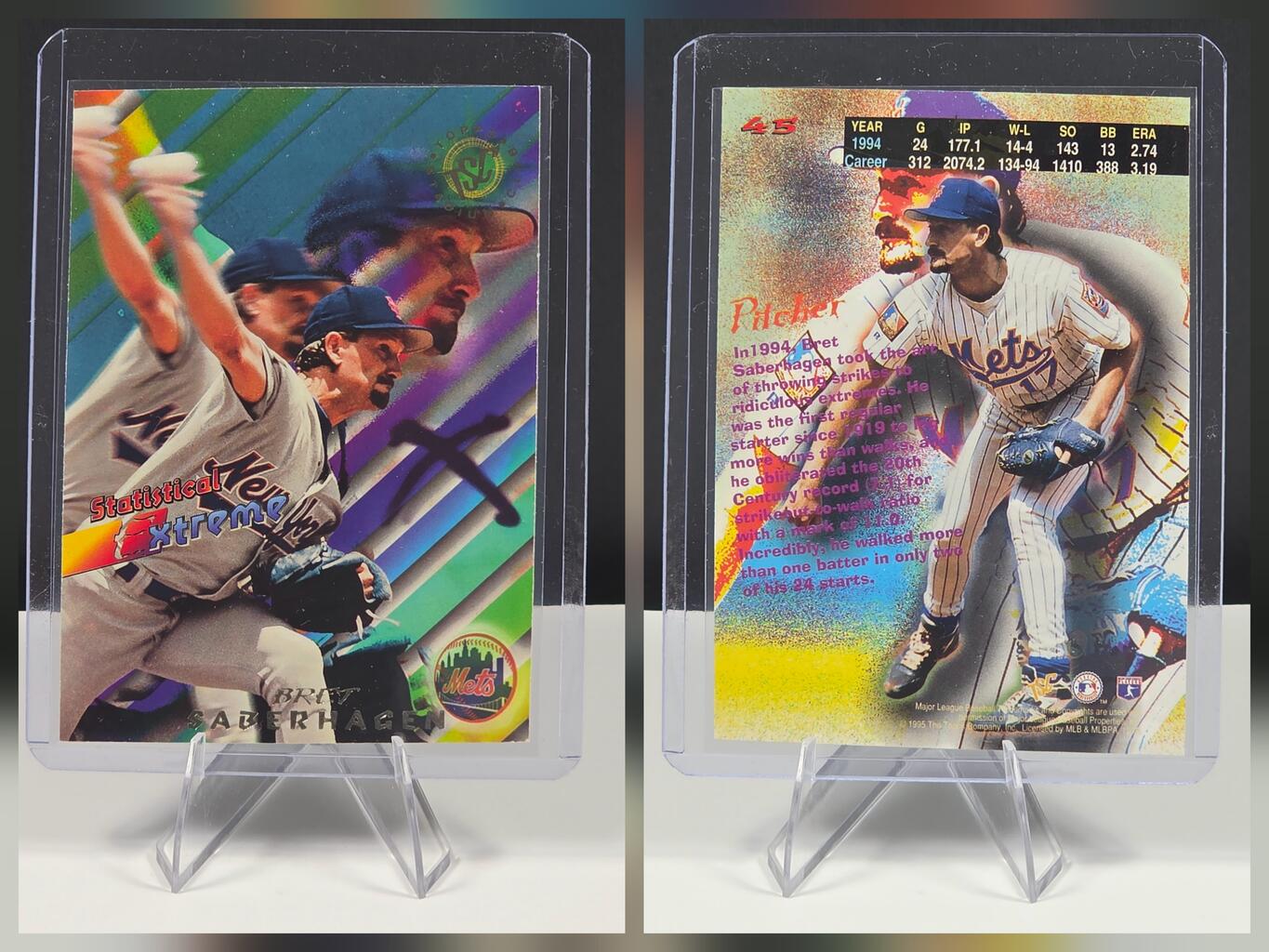
Success can make a journey look simple when we view it from the end.
Bret Saberhagen's wasn't.
At just 21 years old, Saberhagen produced an extraordinary season for the Kansas City Royals.
He won the 1985 American League Cy Young Award.
He helped Kansas City win its first World Series.
And he was named World Series MVP.
It would be easy to draw an arrow from there pointing upward.
His career didn't cooperate.
UP. DOWN. FORWARD.
The season after his breakthrough was much harder.
Then Saberhagen won 18 games in 1987.
Another difficult season followed.
Then came 1989.
Saberhagen went 23–6, led the American League in ERA and won his second Cy Young Award.
Greatness had returned. But not in a straight line.
That pattern followed him.
There were excellent seasons. There were injuries. There were trades. There were attempts to return.
In 1991, Saberhagen threw a no-hitter for Kansas City.
Later, serious shoulder problems threatened his career.
Yet even after major setbacks, he returned and became an effective pitcher again with Boston.
WHAT DOES PROGRESS LOOK LIKE?
We like progress when it's easy to recognize.
Yesterday was good. Today is better. Tomorrow will be better still.
But careers don't promise that. Neither does life.
A difficult chapter can follow an extraordinary one.
And another meaningful chapter can come after that.
Saberhagen's accomplishments didn't become less real because struggle appeared between them.
The struggles didn't erase what he could still do either.
👀 LOOK AT THE CARD AGAIN
The card captures one point on the line.
It cannot show you where that line goes next.
Up. Down. Sideways. Forward again.
Maybe that's why judging an entire journey from one difficult season — or one wonderful season — is dangerous.
Neither one necessarily tells you what's coming.
💎 HIDDEN GEM — UNEVEN
Progress doesn't have to be steady to still be progress.
💭 HIYASAT REFLECTION
Have you mistaken an uneven journey for one that isn't moving forward?