Some careers are remembered for what went wrong. Others are shaped by what happened after expectations changed, roles disappeared, or life forced a different path.
The five stories
Chapter 1 · Sam Bowie — JUDGED
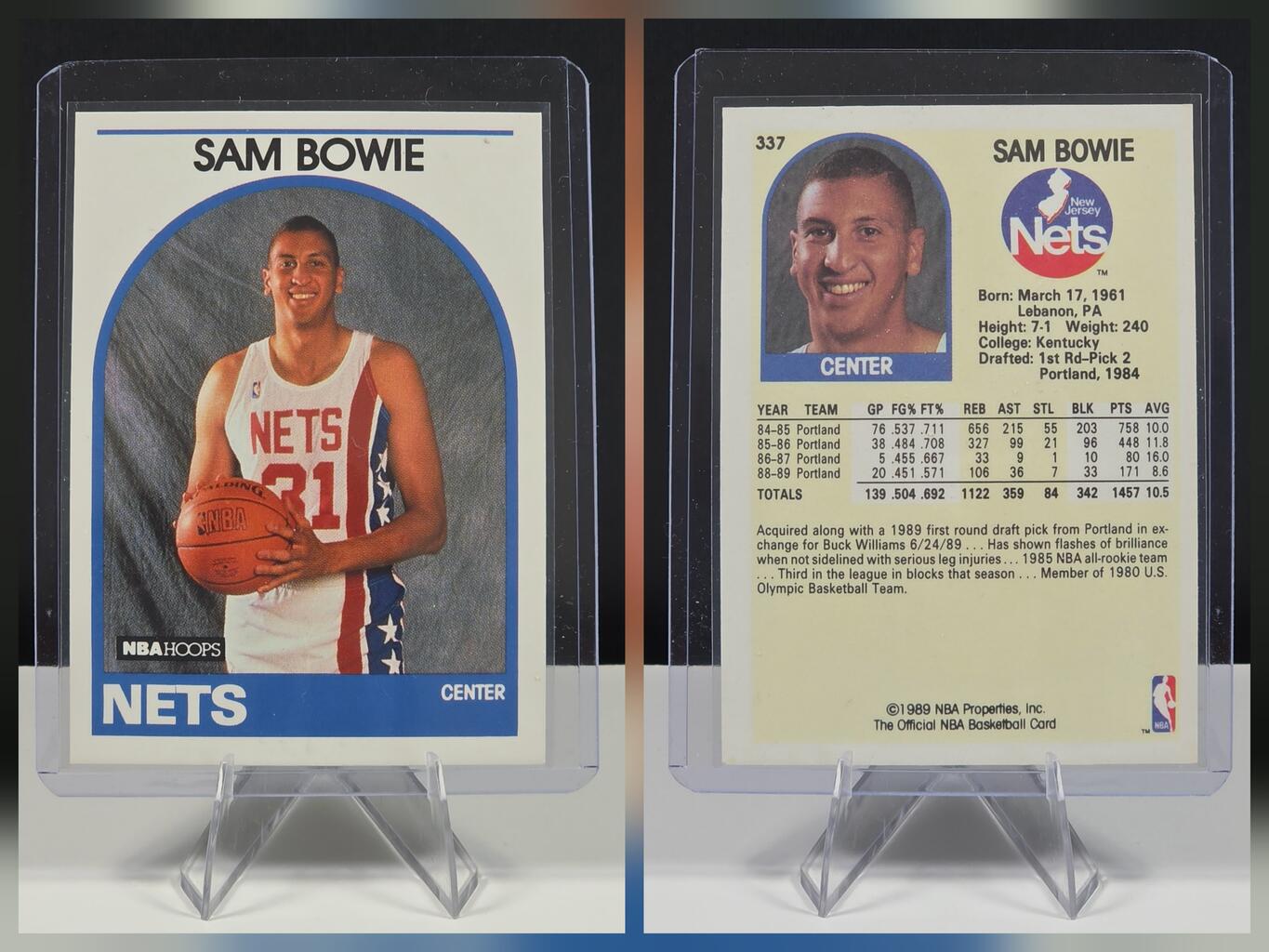
Physical Card: 1990–91 NBA Hoops #337 — Sam Bowie, New Jersey Nets
Some athletes are remembered for what they accomplished. Others spend their careers being measured against what people believe should have happened.
Sam Bowie became the second pick in the 1984 NBA Draft. Portland selected the 7-foot-1 center after Houston chose Hakeem Olajuwon and before Chicago selected Michael Jordan. That order would follow Bowie for the rest of his life. Whenever the draft was revisited, his name became part of a comparison he could never escape.
But that comparison leaves out much of the person standing behind it.
Bowie had already experienced serious leg problems at Kentucky, including a stress fracture that kept him out for two seasons. In Portland, more injuries interrupted a career that had barely been given time to develop. Instead of becoming the dominant center the Trail Blazers hoped for, he repeatedly found himself recovering, returning, and trying again.
It would have been easy for his story to end there.
It didn't.
In 1989, Bowie was traded to the New Jersey Nets. The card in this exhibition comes from that chapter—not from draft night, not from Portland, and not from the moment history keeps replaying. It shows Bowie in a Nets uniform, standing upright with the basketball in his hands.
That detail matters.
With New Jersey, Bowie remained a productive NBA player. In his first Nets season, he averaged 14.7 points and 10.1 rebounds while starting 54 games. The injuries and comparisons had not erased his ability to contribute. He continued playing for several more seasons and eventually finished his NBA career with the Los Angeles Lakers.
None of that changes what happened in 1984. Michael Jordan became one of basketball's defining figures, and Bowie's career never became what Portland imagined when it selected him.
But a life is larger than the comparison attached to it.
Bowie kept returning to the court after circumstances repeatedly gave people reasons to define him by what went wrong. The statistics may never silence the draft debate. They do reveal something else: there was still a career after the judgment.
👀 LOOK AT THE CARD AGAIN
Look past the name at the top.
Look at the uniform.
This is not Portland. This is New Jersey.
The card quietly captures something the famous draft photograph cannot: Sam Bowie continued.
💎 HIDDEN GEM — JUDGED
Being remembered for what went wrong does not erase what you did afterward.
💭 HIYASAT REFLECTION
Sometimes one decision, one failure, or one difficult chapter becomes the story other people use to explain us.
We cannot always control that judgment. We can control whether we allow it to become the final chapter.
What remains is not only what happened to us. It is also what we continued to do after it happened.
Chapter 2 · Terrell Brandon — AFTER
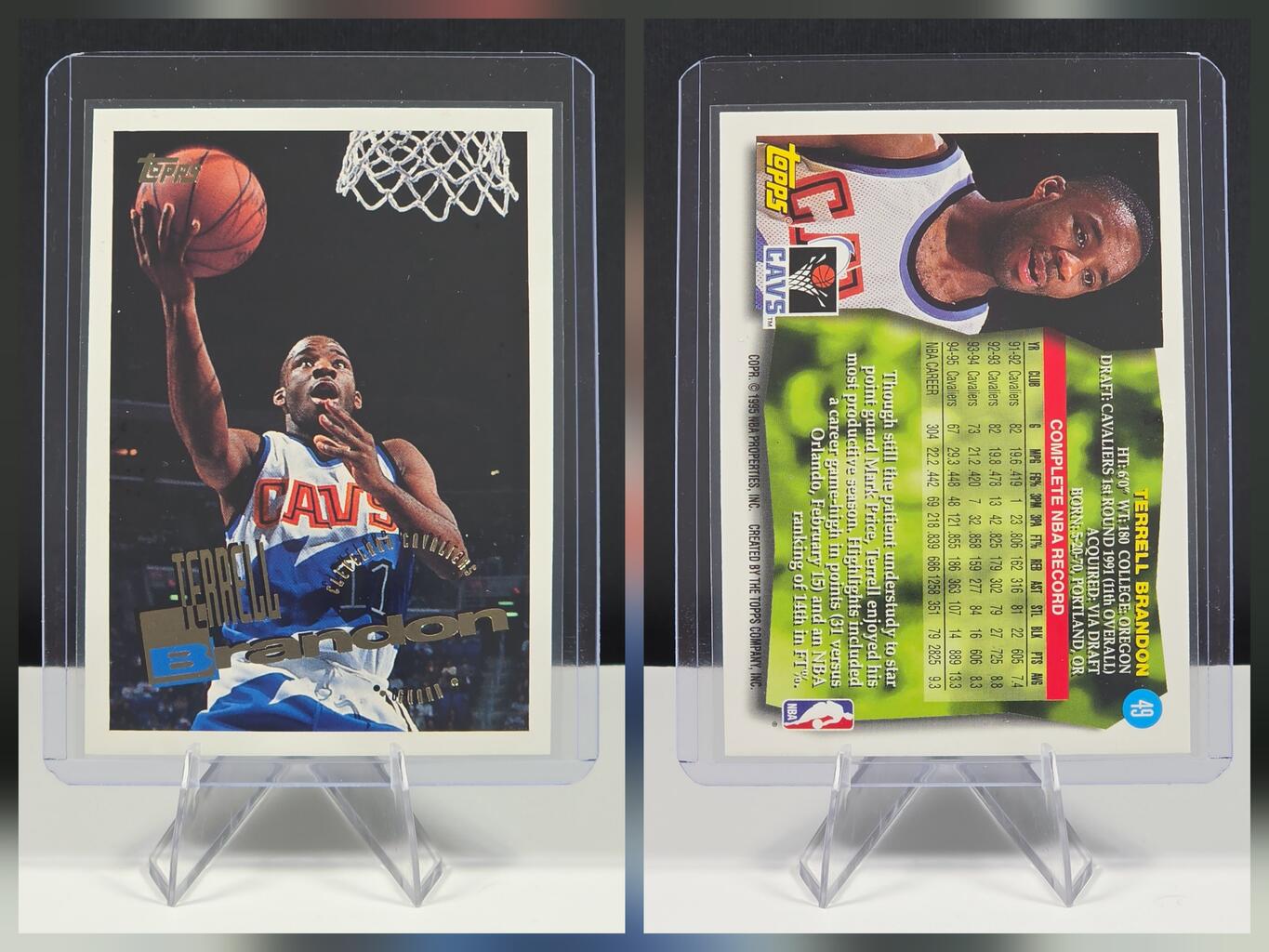
Physical Card: 1995–96 Topps #49 — Terrell Brandon, Cleveland Cavaliers
Some athletes know when their final season is coming.
Terrell Brandon did not.
Cleveland selected Brandon with the 11th pick of the 1991 NBA Draft. At 5-foot-11, he entered the league as a young point guard learning behind established players. His rise was gradual. Then, in the middle of the decade, everything seemed to come together.
Brandon became an NBA All-Star in 1996 and again in 1997. During the 1996–97 season, he averaged 19.5 points and 6.3 assists for Cleveland. Sports Illustrated went even further, featuring him as “The Best Point Guard in the NBA.” That same season, Brandon received the NBA Sportsmanship Award.
For a time, he had reached the place every young player imagines.
The card in this exhibition comes from that rise.
Brandon is attacking the basket in a Cavaliers uniform, the ball extended toward the rim. There is movement in the image—someone still climbing, still becoming. The card is 1995–96 Topps #49, from the season of his first All-Star selection.
But careers rarely move in straight lines.
Brandon later played for Milwaukee and Minnesota. With the Timberwolves, he remained an effective point guard, averaging 17.1 points and 8.9 assists in 1999–2000 and 16.0 points and 7.5 assists the following season. Then a serious knee injury changed everything. He appeared in only 32 games in 2001–02 and never played another NBA game.
He tried to come back.
Years later, Brandon said he tested the knee repeatedly because he was not ready to give up. Eventually, his body gave him an answer his ambition did not want to accept.
Basketball ended.
Terrell Brandon did not.
Back in Portland, he continued operating the barber shop he had started years earlier, remaining connected to the community that existed beyond the arena. The role changed, but the person remained.
👀 LOOK AT THE CARD AGAIN
Look at Brandon moving toward the basket.
This card captures a player approaching the height of his career.
Nothing in the image tells you how suddenly basketball would eventually stop.
That knowledge changes the way we see it.
The card is no longer only about where he was going.
It is also about appreciating what was there while it lasted.
💎 HIDDEN GEM — AFTER
A career can stop suddenly. A life does not have to.
💭 HIYASAT REFLECTION
We sometimes build so much of ourselves around one role that we cannot imagine who we will be without it.
Then life changes the plan.
What remains is not simply the thing we lost. It is the experience, character, relationships, and purpose we carry beyond it.
An ending can take away a role without taking away the person who lived it.
Chapter 3 · Nick Anderson — MORE
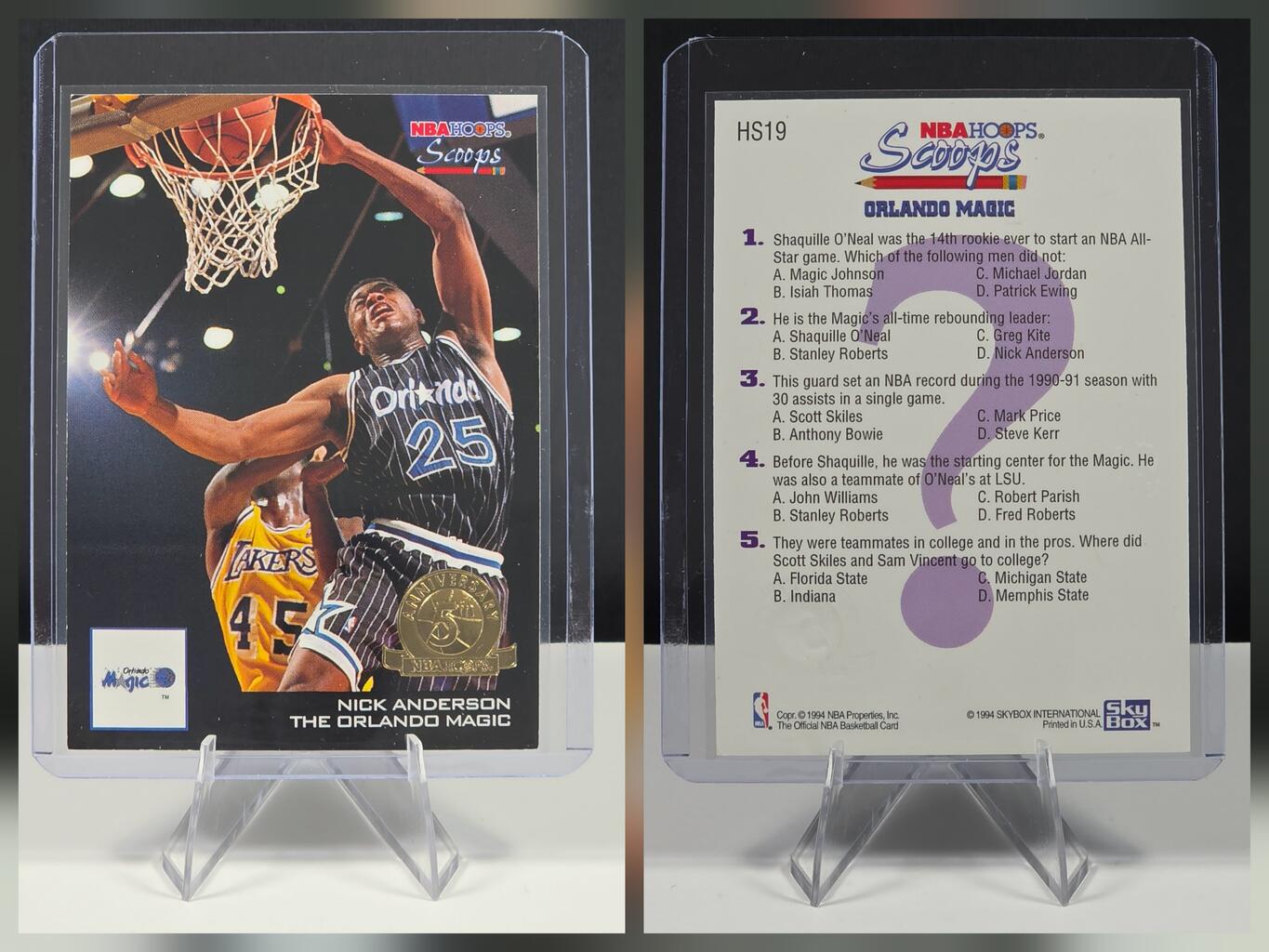
Physical Card: 1993–94 NBA Hoops Scoops Fifth Anniversary Gold #HS19 — Nick Anderson, Orlando Magic
Sometimes one moment becomes so powerful that it begins to swallow everything around it.
For Nick Anderson, that moment came in Game 1 of the 1995 NBA Finals. Orlando was protecting a late lead against Houston when Anderson went to the free-throw line. Over two trips in the final 10.6 seconds, he missed four straight free throws. Houston survived, forced overtime, won the game, and eventually swept the series.
Four misses became part of basketball history.
But Nick Anderson had already built a story long before that night.
In 1989, the Orlando Magic made him the first player ever drafted by the franchise, selecting him 11th overall. Anderson spent ten seasons in Orlando, playing 692 regular-season games and scoring 10,650 points. He was there before the Magic became contenders, helping give a new franchise its early identity.
Before Shaquille O'Neal arrived. Before Penny Hardaway. Before Orlando reached the NBA Finals.
Anderson was already there.
The card in this exhibition comes from before the moment that would become attached to his name. Anderson is rising toward the rim in a black Orlando uniform, attacking the basket over a Lakers defender.
There is no free-throw line.
No disappointment.
No knowledge of what would happen two seasons later.
There is simply a player going toward the basket.
That is what makes the card worth another look.
Anderson's relationship with Orlando also continued long after his playing career. He became one of the inaugural members of the Orlando Magic Hall of Fame and later served the organization as a community ambassador, working with young people through basketball clinics, camps, and community programs.
The missed free throws never disappeared from his story.
They simply stopped being the whole story.
👀 LOOK AT THE CARD AGAIN
Look at Anderson above the defender.
Look at the player before the moment everyone remembers.
Years of work were already behind him. More life was still ahead.
The card reminds us that a single mistake, photograph, or memory can never contain everything a person has been.
💎 HIDDEN GEM — MORE
One remembered moment does not contain an entire life.
💭 HIYASAT REFLECTION
Sometimes the world remembers us for a moment we would rather forget.
We may not be able to erase it, explain it away, or choose what others remember first.
But our lives remain larger than that moment.
What remains is everything that came before, everything we became afterward, and everything we continued to give.
A difficult moment can belong to our story without becoming our identity.
Chapter 4 · Vin Baker — REBUILD
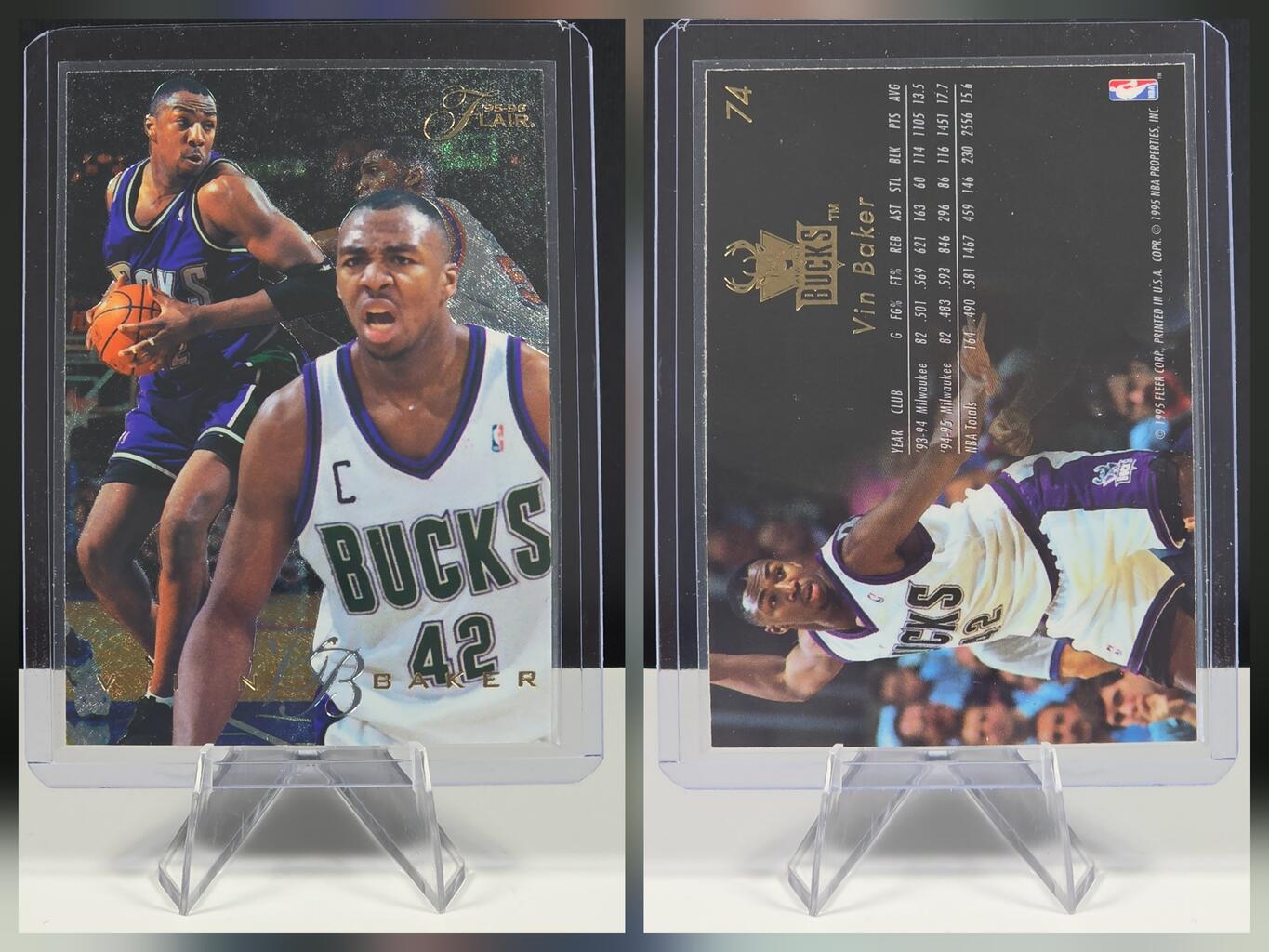
Physical Card: 1995–96 Flair #74 — Vin Baker, Milwaukee Bucks
There are moments when success seems to prove that everything is going right.
Vin Baker had plenty of them.
Milwaukee selected him eighth overall in the 1993 NBA Draft. Within two seasons, he was an All-Star. He would eventually make four consecutive All-Star teams, earn two All-NBA selections, and win an Olympic gold medal with the United States in 2000. At his peak, Baker was one of the NBA’s most productive big men.
The card in this exhibition comes from those rising years.
Baker wears a Milwaukee Bucks uniform, number 42 across his chest. The image captures an athlete whose future still appears to be opening in front of him. In 1995–96, he averaged 21.1 points and 9.9 rebounds and was named an All-Star for the second time.
But success did not protect him from what came later.
Baker has spoken openly about his struggle with alcohol addiction, which affected his career, finances, health, and relationships. By the time his NBA playing days were behind him, much of what once seemed permanent was gone. In 2011, he entered treatment again and began rebuilding his life through recovery, faith, family, and service.
The rebuilding did not look glamorous.
For a time, the former NBA All-Star worked at Starbucks. Baker later described the job not as humiliation, but as part of his recovery. Showing up early, accepting responsibility, serving people, and completing an ordinary day’s work became meaningful again.
Then basketball returned in a different form.
Baker eventually rejoined the Milwaukee Bucks—the organization that had drafted him—as a coach. He returned to the game carrying more than the experience of an All-Star. He also carried what he had learned after basketball stopped being the center of his life.
That makes this old Milwaukee card feel different now.
It shows Vin Baker before the fall.
But his deeper story is about the man who stood up afterward.
👀 LOOK AT THE CARD AGAIN
Look at number 42.
Look at the young All-Star standing near the beginning of everything he thought he was building.
The card cannot show what he would lose.
It also cannot show what he would rebuild.
That part came later.
💎 HIDDEN GEM — REBUILD
What remains can become the foundation for what comes next.
💭 HIYASAT REFLECTION
Sometimes life does more than change our plans. It strips away things we believed defined us—success, status, money, work, even our sense of who we are.
What remains may feel small.
But rebuilding rarely begins with everything.
It begins with something.
A decision. A relationship. A responsibility. A reason to show up again.
We may never recover the exact life we once had.
Sometimes we build something deeper instead.
Chapter 5 · Joe Smith — STAY
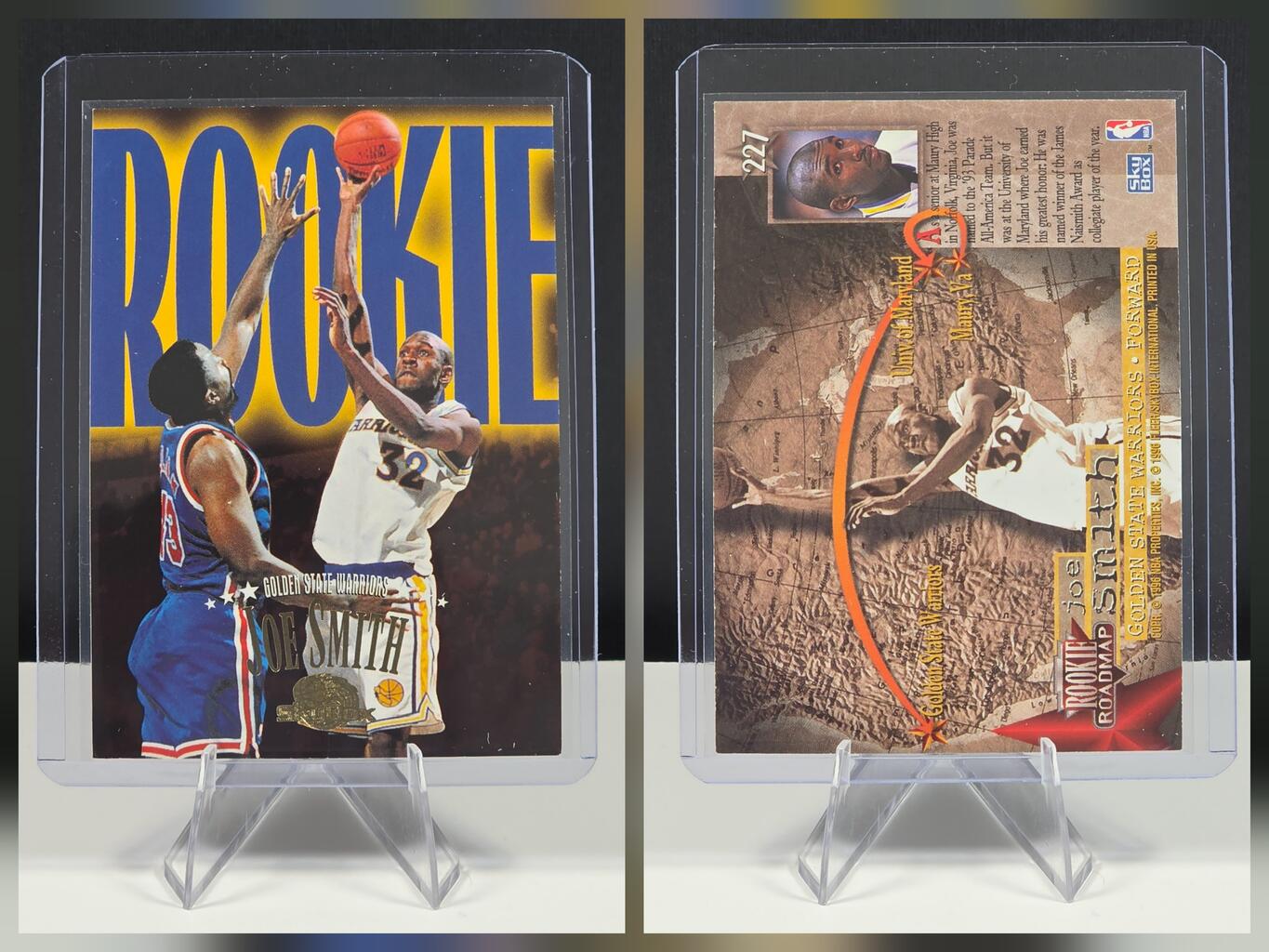
Physical Card: 1995–96 Fleer Ultra #288 — Joe Smith, Golden State Warriors
At the beginning, Joe Smith's career looked exactly like a first overall pick's career was supposed to look.
After becoming one of college basketball's most celebrated players at Maryland, Smith was selected first overall by the Golden State Warriors in the 1995 NBA Draft. He immediately started all 82 games as a rookie, averaging 15.3 points and 8.7 rebounds and earning NBA All-Rookie First Team honors. The following season, his scoring climbed to 18.7 points per game.
Everything seemed to be moving upward.
Then the shape of his career changed.
Smith was traded during his third NBA season. The player who entered the league as someone's future franchise cornerstone gradually became something different: a veteran teams kept finding a place for.
Golden State became Philadelphia. Then Minnesota. Detroit. Milwaukee. Denver. Philadelphia again. Chicago. Cleveland. Oklahoma City. Atlanta. New Jersey. Los Angeles.
By the time Smith's NBA career ended in 2011, he had played 16 seasons, 1,030 regular-season games and for 12 different franchises.
That career looks very different from the one suggested by the words FIRST OVERALL PICK.
But perhaps that is the point.
Being chosen first creates an expectation that everything afterward must somehow justify the selection. Championships, All-Star appearances and individual awards become the measurements people use.
Smith's career followed another path.
As his role changed, he changed with it. Minutes decreased. Teams changed. Eventually he was no longer being asked to carry a franchise. Yet season after season, another NBA roster still had room for him.
There is something worth noticing in that.
The card in this exhibition captures Smith before any of that was known. Behind him, one enormous word dominates the design: ROOKIE.
It celebrates possibility—the moment when a career can still become almost anything.
But looking at the card decades later reveals another story.
Joe Smith's greatest lesson may not be found in what people expected him to become.
It may be found in how long he remained after those expectations changed.
👀 LOOK AT THE CARD AGAIN
Look at the word behind him.
ROOKIE.
The card celebrates the beginning.
But Joe Smith's story was built through everything that came afterward—new teams, smaller roles, different expectations, and another opportunity to stay in the game.
💎 HIDDEN GEM — STAY
Sometimes success is not becoming what was predicted. It is continuing when the prediction no longer fits.
💭 HIYASAT REFLECTION
There are moments when the future seems clearly mapped out for us. Then life changes the role.
What we expected may disappear. Recognition may become smaller. The place we once occupied may belong to someone else.
But meaning does not disappear simply because the role changes.
Sometimes what remains is the willingness to adapt, contribute, and keep showing up when being the person everyone expected is no longer possible.