The five stories
Chapter 1 · Dennis Scott — PROMISE
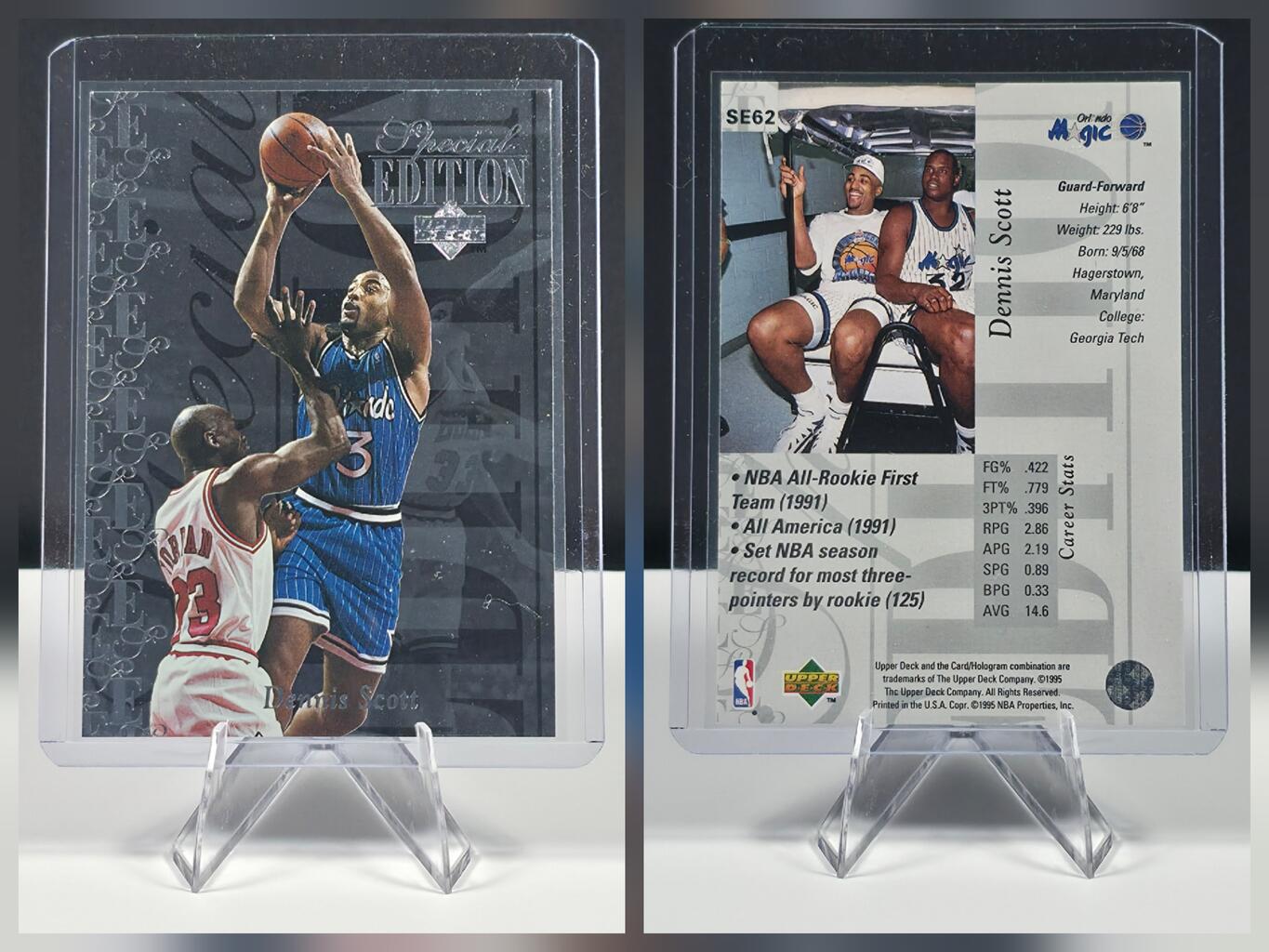
Physical Card: 1995–96 Upper Deck Special Edition #SE62 — Dennis Scott, Orlando Magic
Promise is usually associated with beginnings.
A young athlete shows unusual ability. People notice. They begin imagining what that person might become.
Dennis Scott knew that feeling.
At Georgia Tech, Scott became one of college basketball's most dangerous scorers. He helped lead the Yellow Jackets to the 1990 Final Four, earned ACC Player of the Year honors, and left college after his junior season when the Orlando Magic selected him fourth overall in the NBA Draft.
There was promise everywhere.
And Scott delivered on much of it.
Alongside Shaquille O'Neal and Penny Hardaway, he became an important part of an Orlando team that grew from a young franchise into an NBA Finals contender. His outside shooting earned him the nickname "3-D," and during the 1995–96 season represented by this card, Scott made 267 three-pointers—then an NBA single-season record.
Promise had become proof.
But careers move quickly.
Scott eventually left Orlando and played for several teams before his NBA career ended. The player once known for launching threes stepped away from the court.
That could have been where the story stopped.
It wasn't.
Scott found another way to remain connected to basketball through broadcasting. Then, decades after leaving Georgia Tech early for the NBA, he returned to the university—not as a basketball star trying to reclaim his past, but as a student.
He completed an Executive MBA while continuing his broadcasting career.
Years after people had stopped wondering what the young Dennis Scott might become, he was still becoming.
And eventually, another circle closed.
Georgia Tech retired his No. 4 jersey, raising it into the rafters more than three decades after he had last played there.
That changes the meaning of PROMISE.
Promise does not belong only to youth.
It does not expire when a career ends, when attention moves elsewhere, or when the talent that first made people notice us is no longer what we do every day.
Sometimes promise simply changes direction.
👀 LOOK AT THE CARD AGAIN
Look at Dennis Scott in an Orlando Magic uniform.
The card captures him during the chapter most people remember—the shooter, the contender, the record-setter.
But the card cannot show you everything that came afterward.
The broadcaster.
The student returning to Georgia Tech.
The graduate.
The No. 4 eventually raised into the rafters.
The card captures a moment.
The person kept becoming.
💎 HIDDEN GEM — PROMISE
Promise is not only what you might become. Sometimes it is what remains possible after everyone thinks your defining chapter is over.
💭 HIYASAT REFLECTION
We often place deadlines on our own potential.
By a certain age, we think we should have arrived. We measure ourselves against the career we built, the opportunities we missed, or the person we once expected to become.
But life rarely develops in one straight line.
A gift can open the first door without determining every room we will enter.
Dennis Scott's basketball ability carried him somewhere extraordinary.
It did not have to be the final version of him.
Perhaps that is worth remembering when we wonder whether our own best opportunities are behind us.
The promise we carried when we were younger may not disappear.
It may simply be waiting to take another form.
Chapter 2 · Kevin Johnson — EXPECTATION
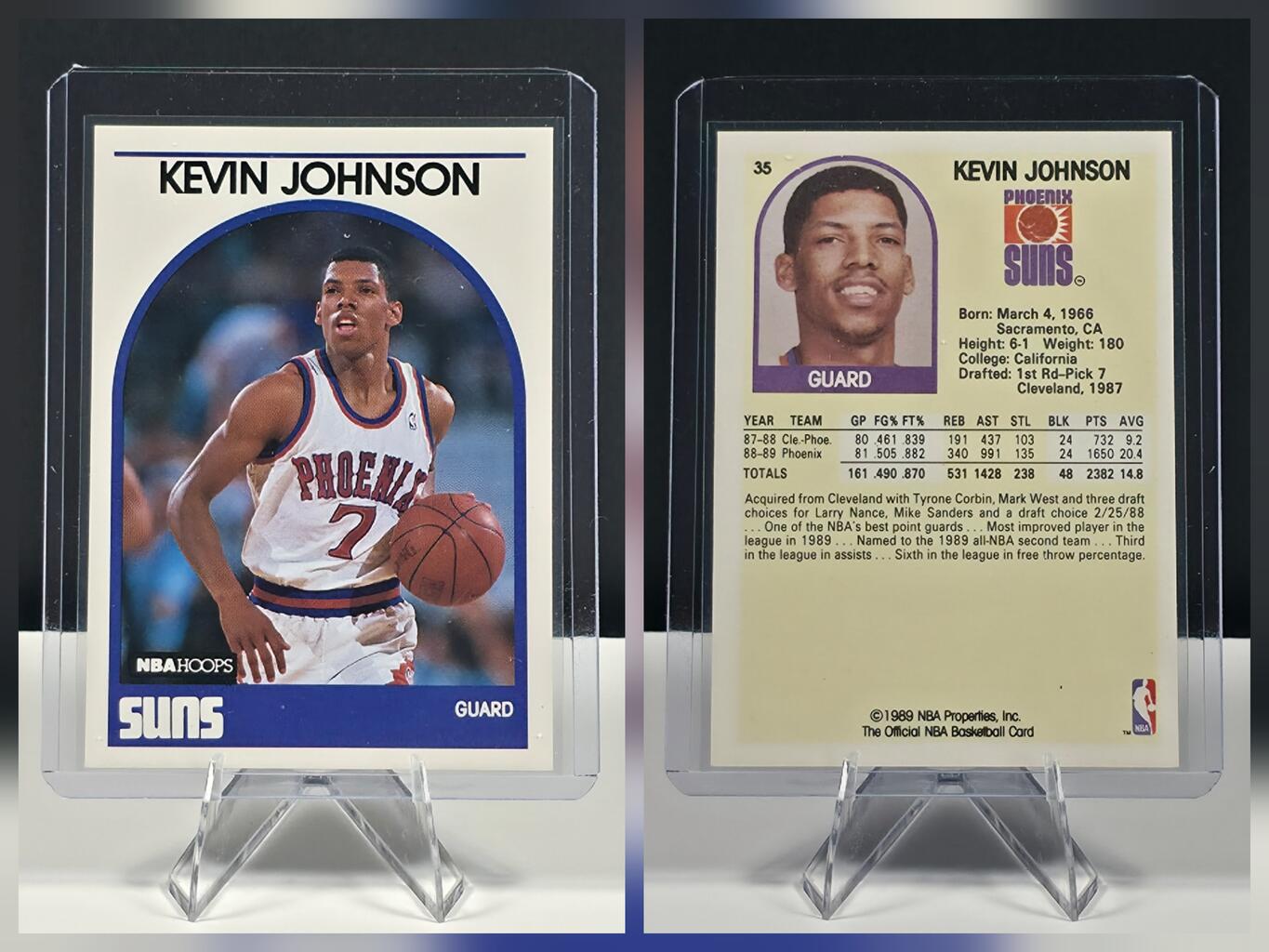
Physical Card: 1989–90 NBA Hoops #35 — Kevin Johnson, Phoenix Suns
Expectation often begins with achievement.
Do something remarkable once, and people celebrate.
Do it often enough, and they begin expecting it.
Kevin Johnson learned that quickly.
Selected seventh overall by Cleveland in the 1987 NBA Draft, Johnson entered the league with talent but an uncertain path. Before his rookie season was over, he was traded to Phoenix.
That move changed his opportunity.
Then Johnson changed the expectations.
In his first full season with the Suns, he averaged 20.4 points and 12.2 assists per game. He was named the NBA's Most Improved Player and earned All-NBA Second Team honors.
Those numbers appear on the back of this card.
But numbers cannot show what happens after you establish a standard like that.
Johnson became a three-time NBA All-Star and helped Phoenix grow into a contender. The Suns eventually reached the 1993 NBA Finals.
Success had changed the question.
People no longer wondered whether Kevin Johnson could play.
They expected him to deliver.
But his story was already extending beyond basketball.
In 1989, while his NBA career was rising, Johnson founded St. HOPE in his hometown of Sacramento to create opportunities for young people.
After basketball, Sacramento became the setting for another challenge.
Johnson entered public service and was elected mayor of the city in 2008.
The expectations changed again.
Points and assists no longer mattered. Leadership now affected schools, neighborhoods and a city. Public life also brought greater scrutiny and controversy.
That may be what makes Johnson's journey worth examining.
Achievement does not free us from expectation.
Sometimes it creates the next version of it.
👀 LOOK AT THE CARD AGAIN
Turn the card over.
20.4 points.
12.2 assists.
Most Improved Player.
All-NBA Second Team.
The card captures the season when Johnson showed the basketball world what he could do.
But it cannot show everything that followed.
An NBA Finals.
Community work.
Public office.
Greater responsibility.
Greater scrutiny.
The card records an achievement.
Life kept moving the standard.
💎 HIDDEN GEM — EXPECTATION
Expectation grows wherever ability has already been proven.
💭 HIYASAT REFLECTION
There is something rewarding about having people believe we can deliver.
It means our work has been noticed.
But yesterday's achievement can quietly become today's expectation.
That happens in sports, careers, families and everyday life. The reliable person receives another responsibility. The strong performer receives another difficult assignment. The person who has led before is asked to lead again.
And sometimes the expectations we carry are our own.
Kevin Johnson's journey reminds us that every new chapter can change what people ask of us.
The challenge is not simply meeting every expectation.
It is understanding which expectations deserve to shape the person we are becoming.
Because proving what we can do is one part of growth.
Deciding what to do with that ability is another.
Chapter 3 · Mitch Richmond — RESPONSIBILITY
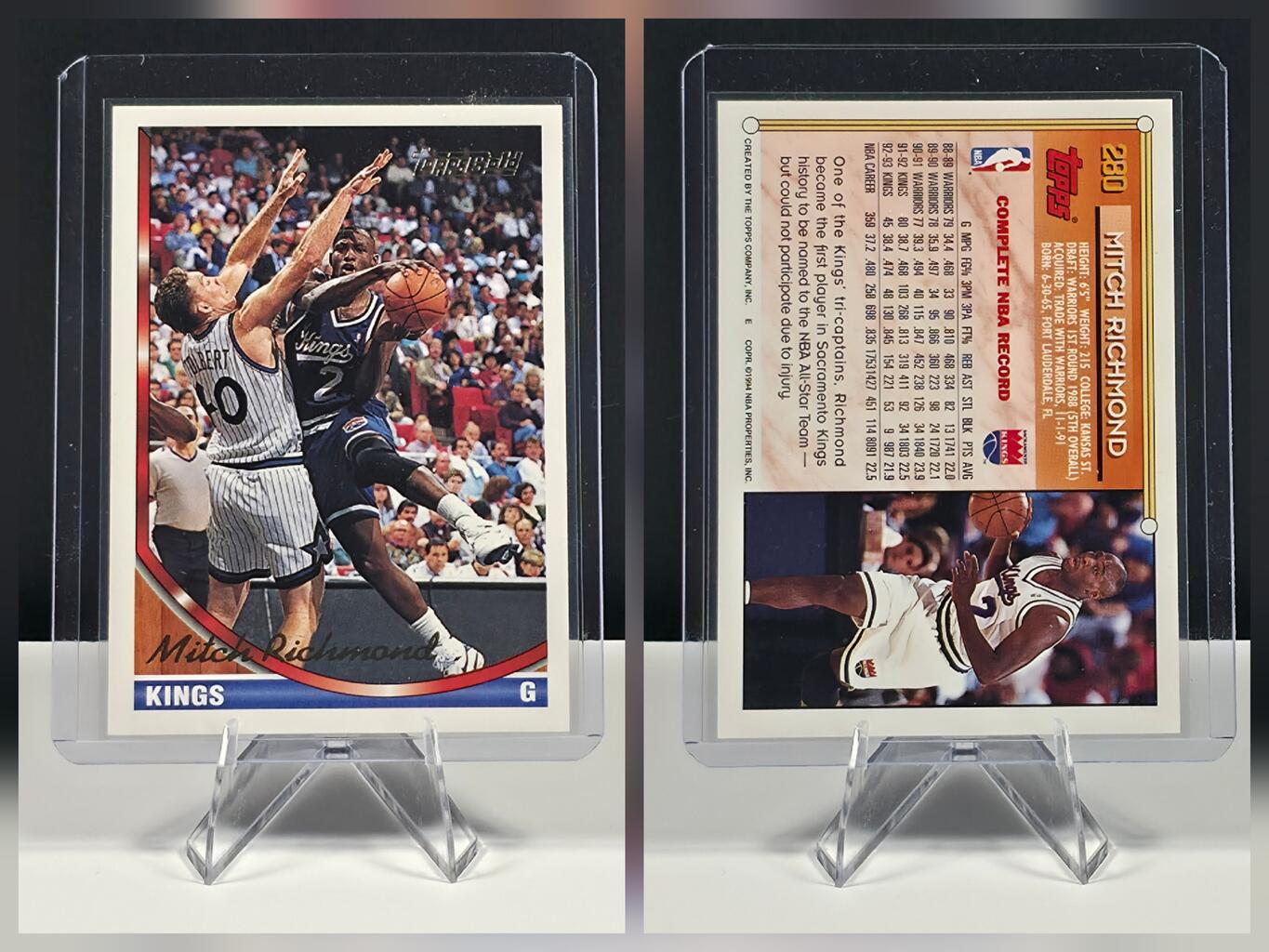
Physical Card: 1993–94 Topps Gold #280 — Mitch Richmond, Sacramento Kings
Responsibility often finds the person who has already proven they can be trusted.
Mitch Richmond became that person.
He entered the NBA with Golden State and immediately showed he belonged, winning Rookie of the Year. Alongside Tim Hardaway and Chris Mullin, he became part of the explosive trio known as Run TMC.
Then everything changed.
In 1991, Richmond was traded to Sacramento.
The Kings were not contenders. Winning was difficult, and the national attention Richmond had experienced with Golden State became harder to find.
But his responsibility grew.
Sacramento needed someone dependable.
Richmond became that player.
Season after season, he carried a large share of the scoring burden. He became an All-Star, represented the Kings among the league's best players, and eventually earned recognition as one of the finest shooting guards of his generation.
But responsibility does not guarantee immediate reward.
Richmond spent seven seasons in Sacramento without reaching the playoffs. Later stops in Washington brought different challenges as age and injuries began changing his role.
Then, near the end of his career, something unexpected happened.
Richmond joined the Los Angeles Lakers.
He was no longer the star carrying a franchise. His minutes were limited. His responsibility had changed.
In 2002, after years of being the player teams depended upon to produce, Richmond finally became an NBA champion.
Then came another kind of recognition.
In 2014, Mitch Richmond was inducted into the Naismith Memorial Basketball Hall of Fame.
The player who had spent so many prime years performing away from the brightest spotlight was finally recognized among basketball's greats.
That makes RESPONSIBILITY more than a story about carrying a team.
Sometimes responsibility means continuing to give what you can even when the reward is uncertain, the role changes, or recognition arrives much later.
👀 LOOK AT THE CARD AGAIN
Look at Richmond attacking the basket in a Sacramento uniform.
The image captures the player people depended upon.
But the card cannot show everything he would carry afterward.
More seasons as Sacramento's star.
A changing role.
A championship from the bench.
And eventually, a place in the Hall of Fame.
The responsibility changed.
The person carrying it had to change too.
💎 HIDDEN GEM — RESPONSIBILITY
Responsibility is not always carrying the same load. Sometimes it is accepting how your role changes and still finding a way to contribute.
💭 HIYASAT REFLECTION
Being dependable can become part of our identity.
At work, at home, or within a team, people learn who they can turn to.
But life eventually changes the role.
We may no longer be the strongest voice, the primary provider, the person making every decision, or the one receiving recognition.
That does not make us less valuable.
Mitch Richmond's journey reminds us that responsibility is not measured only by how much we carry.
Sometimes maturity means knowing when to carry more.
And sometimes it means accepting that contributing differently still matters.
Chapter 4 · John Stockton — CONSISTENCY
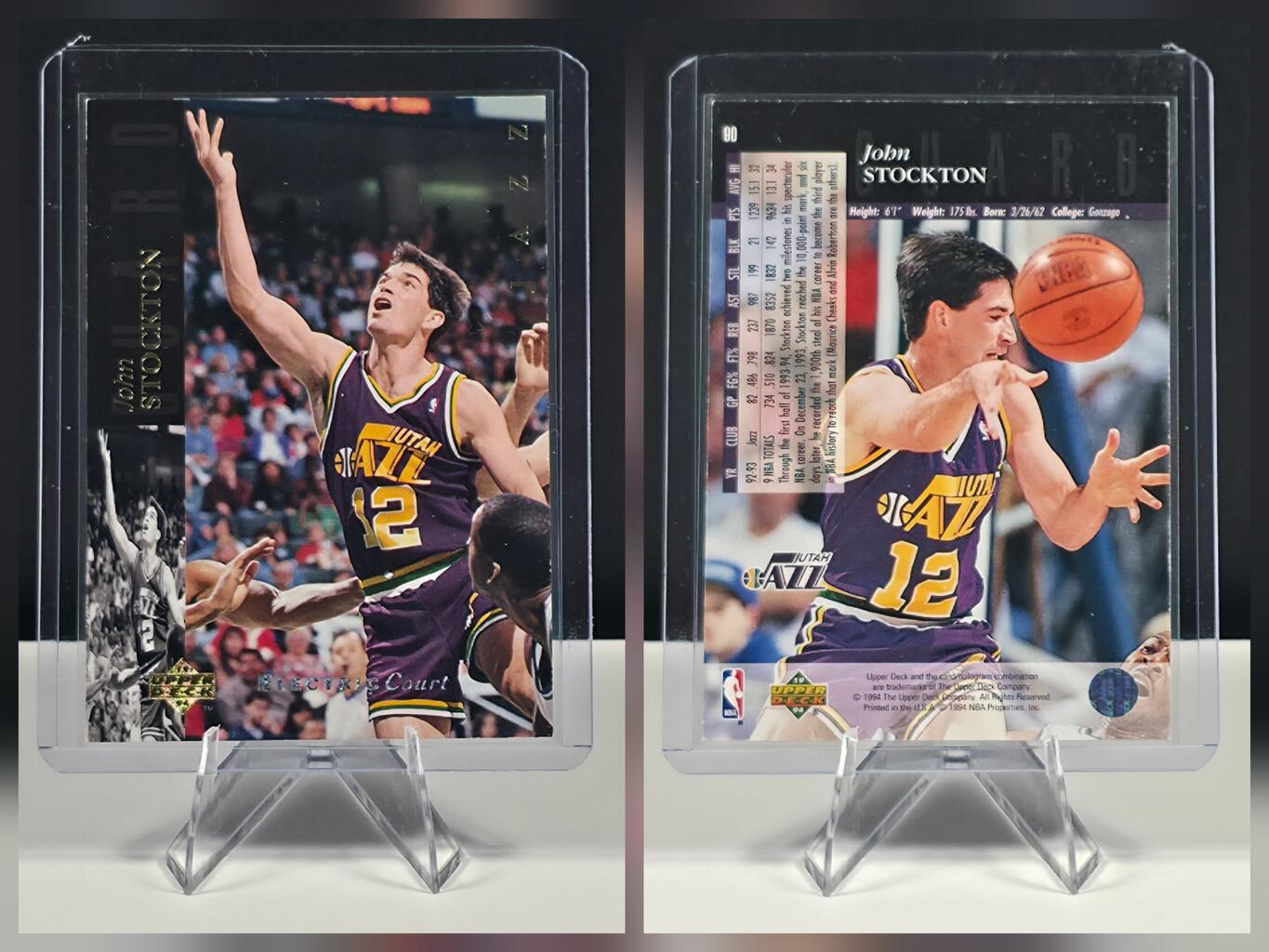
Physical Card: 1993–94 Upper Deck Special Edition Electric Court #90 — John Stockton, Utah Jazz
Greatness does not always announce itself loudly.
Sometimes it simply keeps showing up.
John Stockton built a career that way.
He arrived in Utah as the 16th pick in the 1984 NBA Draft and spent his first years earning a larger role. Once he became the Jazz starting point guard, something remarkable followed.
He stayed.
For 19 seasons, Stockton wore the same uniform. He played all 82 regular-season games in 17 of them and helped Utah reach the playoffs every year of his career.
There were bigger stars and louder personalities around the NBA.
Stockton simply kept producing.
Pass after pass.
Game after game.
Season after season.
The milestones accumulated. He became a ten-time All-Star, led the NBA in assists nine consecutive seasons and eventually finished his career as the league's all-time leader in both assists and steals.
But consistency is easier to admire after the numbers become records.
Living it is different.
It means returning when yesterday's work is already forgotten. It means doing the ordinary things well enough, long enough, that they eventually become extraordinary.
And when Stockton's playing career ended in 2003, his life did not suddenly become louder.
He returned home to Spokane.
Recognition followed him—the retired jerseys, a statue in Utah, and induction into the Basketball Hall of Fame in 2009.
Yet accounts from Gonzaga describe something quieter beyond those honors: a man devoted to family and community, often helping people without needing attention for it.
Perhaps that is another form of consistency.
The habits that define us do not have to disappear when the arena does.
👀 LOOK AT THE CARD AGAIN
Look at Stockton with the ball in his hands.
This card captures one possession.
One game.
One season.
It cannot show 19 years in Utah.
It cannot show 15,806 assists or 3,265 steals.
And it cannot show the quieter life that followed basketball.
A card freezes one moment.
Consistency is everything that happens between those moments.
💎 HIDDEN GEM — CONSISTENCY
Consistency is not one extraordinary performance. It is ordinary effort repeated until it becomes part of who you are.
💭 HIYASAT REFLECTION
We often look for dramatic evidence that our lives are moving forward.
But progress is usually quieter.
Showing up for another shift.
Keeping another promise.
Doing the work correctly when nobody is watching.
Being there again for the people who depend on us.
None of those moments may feel remarkable by themselves.
John Stockton's journey reminds us that they do not have to.
A meaningful life is rarely built from one great performance.
It is built from what we choose to repeat.
And eventually, those repeated choices become more than something we do.
They become evidence of who we are.
Chapter 5 · Isiah Thomas — LEADERSHIP
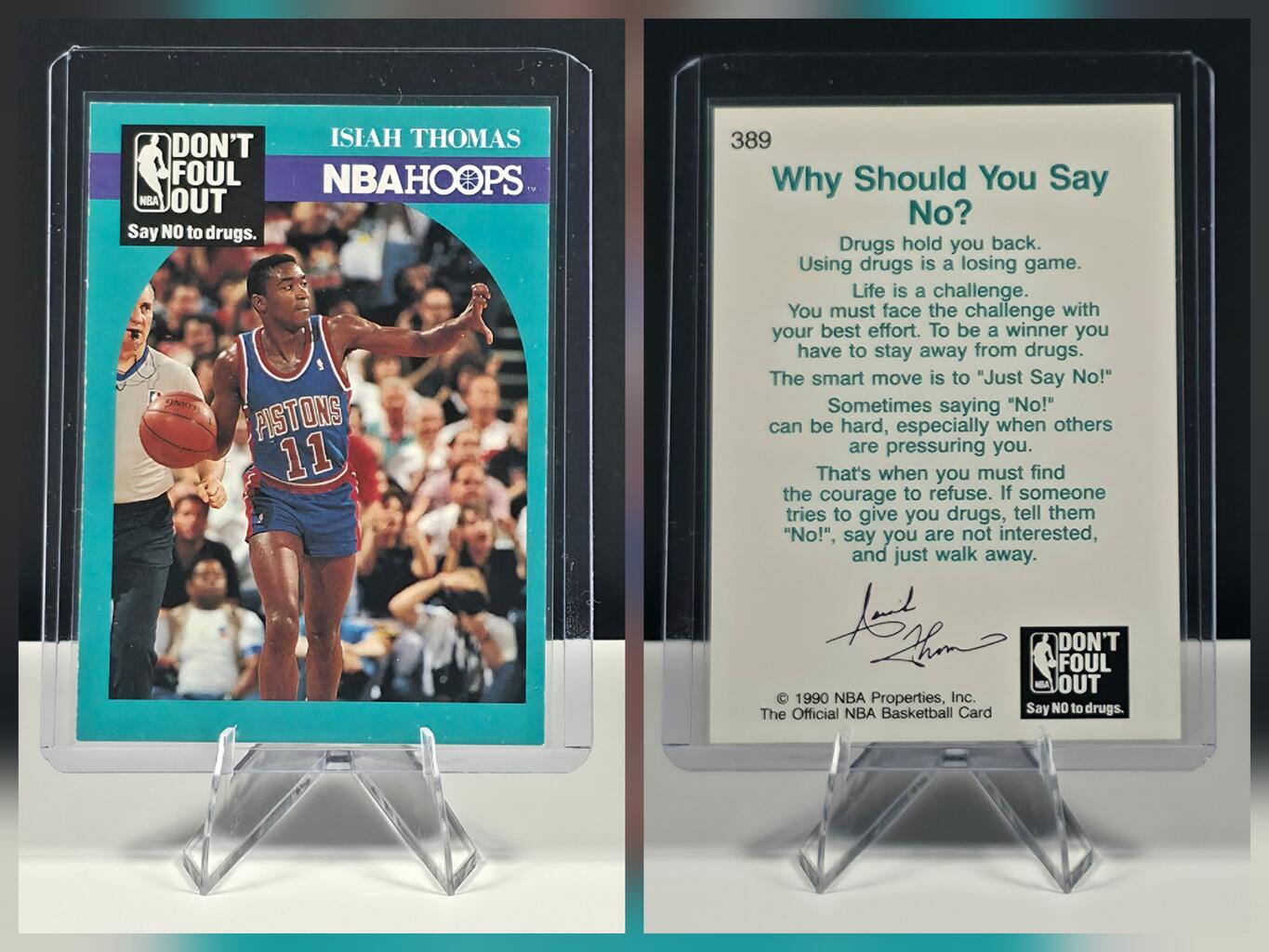
Physical Card: 1990–91 NBA Hoops #389 — Isiah Thomas, Detroit Pistons — “Don’t Foul Out”
Leadership looks different when people are watching your decisions.
Isiah Thomas spent much of his basketball life in that position.
As Detroit’s point guard, he directed a team filled with strong personalities and helped transform the Pistons into champions. They won consecutive NBA titles in 1989 and 1990, with Thomas earning Finals MVP in the second.
He had become the person others followed.
But look closely at this card.
There are no statistics on the back.
Instead, it asks a question about pressure.
Why should you say no?
The message encourages young people to resist drugs even when others push them in another direction.
That makes this card unusual.
Thomas is not being presented simply as a great basketball player. His influence is being used to help someone else make a choice.
And leadership followed him beyond the court.
After retiring, Thomas became an executive with the expansion Toronto Raptors, later coached the Indiana Pacers and held major leadership roles with the New York Knicks.
Those chapters were not all championships.
Some decisions succeeded.
Others brought criticism and controversy.
That matters.
Because leadership is not something we prove once.
The person who made the right decision yesterday can make the wrong one tomorrow. A title may give someone authority, but it does not guarantee wisdom.
Thomas kept moving forward. He returned to broadcasting, continued community and educational work, and later earned a master’s degree in education.
His life after basketball became more complicated than the championship story people remembered.
Perhaps real leadership usually is.
It requires us to keep learning after people have already decided who they think we are.
👀 LOOK AT THE CARD AGAIN
Turn the card over.
It does not tell you how many points Thomas scored or how many championships he won.
It talks about courage.
Pressure.
Choices.
Then look beyond the card.
Thomas would spend decades making decisions as an executive, coach, businessman and public figure.
Some strengthened his legacy.
Others challenged it.
The card asks young people to make good choices.
Life kept asking the same thing of him.
💎 HIDDEN GEM — LEADERSHIP
Leadership is not proven by one great decision. The next choice still matters.
💭 HIYASAT REFLECTION
We sometimes imagine leadership as reaching a position where people finally trust our judgment.
But perhaps that is where the harder work begins.
Success can give us influence.
Experience can give us authority.
Neither makes us incapable of being wrong.
Leadership requires something less visible: the willingness to keep examining ourselves, especially after success has given us reasons to believe we already know the answer.
That applies far beyond sports.
Parents lead.
Nurses lead.
Teachers lead.
Friends lead.
Sometimes another person is quietly watching how we respond to pressure.
Isiah Thomas’s journey reminds us that leadership is never permanently earned by what we did before.
Every new chapter asks us again.
What will you choose now?