Potential can open a door. But what happens after that is rarely predictable. A career can meet rejection. Success can arrive later than expected. Growth can take years. Sometimes, moving forward means beginning again.
The five stories
Chapter 1 · Chris Carpenter — POTENTIAL
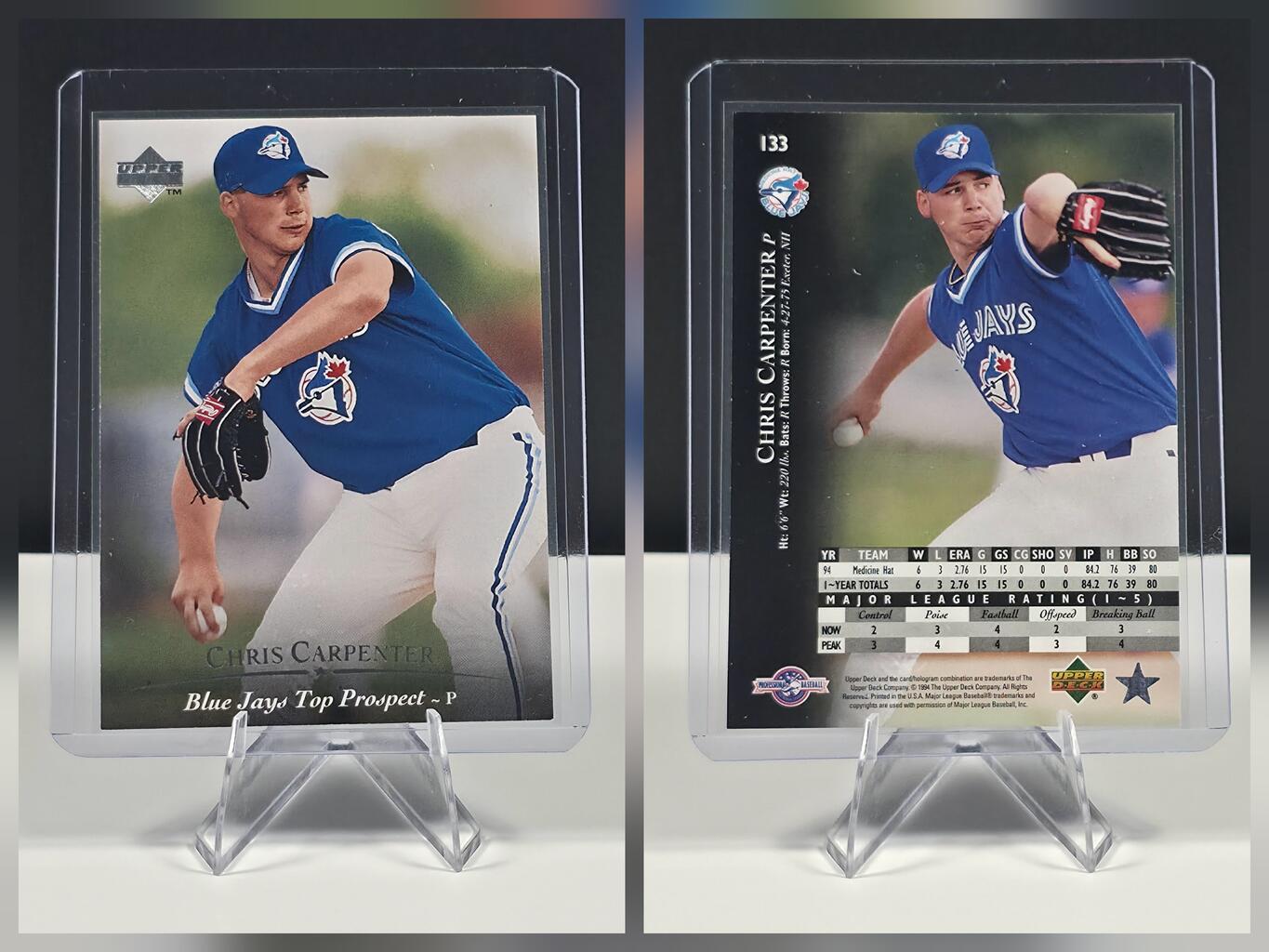
Potential is easy to see after someone becomes successful.
It is much harder to understand while their story is still being written.
The Toronto Blue Jays saw something in Chris Carpenter early. They selected the young pitcher 15th overall in the 1993 MLB Draft.
Four years later, he reached the major leagues.
The potential was there.
But becoming the pitcher people imagined would take much longer.
WHEN POTENTIAL ISN'T ENOUGH
Carpenter showed flashes of what he could become with Toronto.
But there were also struggles.
His performances were inconsistent. Injuries interrupted his progress. Eventually, shoulder problems required surgery.
After the 2002 season, Toronto removed Carpenter from its 40-man roster.
He became a free agent.
That moment can look obvious when we know what happened later.
It wasn't.
There was no guarantee Carpenter would become a star somewhere else.
There wasn't even a guarantee his shoulder would allow him to become the pitcher he once hoped to be.
The potential remained.
The outcome was uncertain.
A YEAR WITHOUT A MAJOR-LEAGUE PITCH
Carpenter signed with the St. Louis Cardinals.
Then he spent the entire 2003 season rehabilitating.
No major-league games.
No dramatic comeback.
Just recovery and the unanswered question of what might still be possible.
In 2004, Carpenter finally broke through.
A year later, he won the 2005 National League Cy Young Award, given to the league's best pitcher.
He helped St. Louis win the 2006 World Series.
Then injuries returned and severely limited him during 2007 and 2008.
Again, the story could have ended there.
It didn't.
Carpenter returned strongly in 2009 and eventually became a central part of another Cardinals championship run in 2011.
👀 LOOK AT THE CARD AGAIN
This card shows Chris Carpenter as a Toronto Blue Jay.
Not the Cy Young winner.
Not the World Series champion.
Not the pitcher we can now look back on and understand.
It captures him while the answer was still unknown.
That's what makes the card interesting.
We already know what Carpenter became.
The person pictured on the card didn't.
💎 HIDDEN GEM — POTENTIAL
Potential is only the possibility of what you might become.
It isn't a promise.
Sometimes the distance between potential and becoming is longer, harder, and more uncertain than anyone expects.
💭 HIYASAT REFLECTION
We often look at potential as though it should tell us the ending.
But potential doesn't know the ending.
It only tells us that something may be there.
There can still be setbacks.
There can still be injuries.
There can still be years when progress is difficult to see.
Chris Carpenter's story doesn't tell us that potential always becomes greatness.
It asks a more interesting question:
What might still be possible when becoming takes longer than expected?
Chapter 2 · Dave Stewart — REJECTION
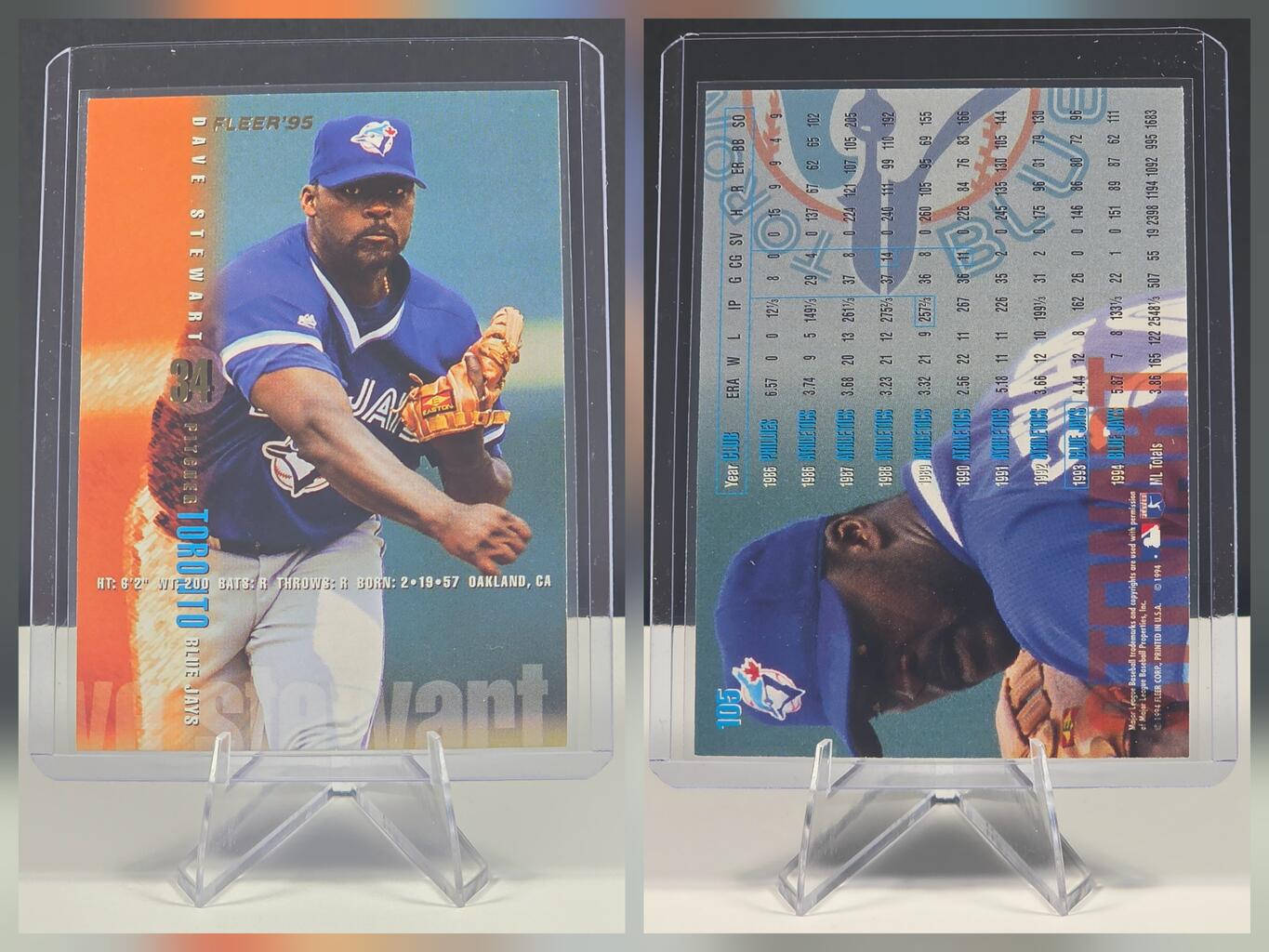
Sometimes rejection isn't completely wrong.
That's what can make it so difficult.
By 1986, Dave Stewart had already spent years trying to establish himself in the major leagues. He had pitched for different teams and in different roles.
The talent was there.
The results weren't always there.
Then the Texas Rangers released him.
THE DECISION
Being released is different from being traded.
A team is choosing to let you go.
Stewart was 29 years old. He wasn't a young prospect waiting for his first chance anymore.
If someone looked at his career at that moment and wondered whether he would ever become a successful major-league starting pitcher, the question would have been understandable.
But there was something nobody could know yet.
Stewart wasn't finished becoming.
WHAT CHANGED?
Oakland gave him another opportunity in 1986.
There, working with pitching coach Dave Duncan, Stewart continued developing as a pitcher.
Then the results changed dramatically.
From 1987 through 1990, Stewart won at least 20 games in four consecutive seasons.
He helped Oakland reach three straight World Series and win the championship in 1989.
The pitcher who once struggled to establish himself had become one of baseball's most trusted starters.
And years later, his road led to Toronto.
ANOTHER OCTOBER
In 1993, the defending champion Blue Jays brought in the veteran Stewart.
Toronto was trying to reach the World Series again.
In the American League Championship Series against Chicago, Stewart won both of his starts, including the series-clinching Game 6.
He was named ALCS MVP.
Toronto advanced to the World Series — and became champions again.
👀 LOOK AT THE CARD AGAIN
Now look at the Dave Stewart card in this exhibition.
You are looking at the veteran.
The champion.
The pitcher trusted with important games.
But years before this card, another team had looked at an earlier version of Dave Stewart and decided to let him go.
That decision was real.
What came afterward was real too.
💎 HIDDEN GEM — REJECTION
Rejection can tell you where you stand.
It cannot tell you how far you can still go.
💭 HIYASAT REFLECTION
Rejection hurts because it can sound like a final judgment.
Sometimes there may even be something we need to learn from it.
Maybe we aren't ready yet.
Maybe something needs to change.
Maybe the opportunity simply isn't ours anymore.
Dave Stewart's story doesn't tell us that every rejection will eventually lead to success.
It shows us that a judgment made at one point in our lives cannot see everything that might happen next.
There can still be work to do.
There can still be things to learn.
There can still be road ahead.
Someone can decide they are finished with you.
That doesn't mean you have to be finished becoming.
Chapter 3 · Paul Molitor — LATER
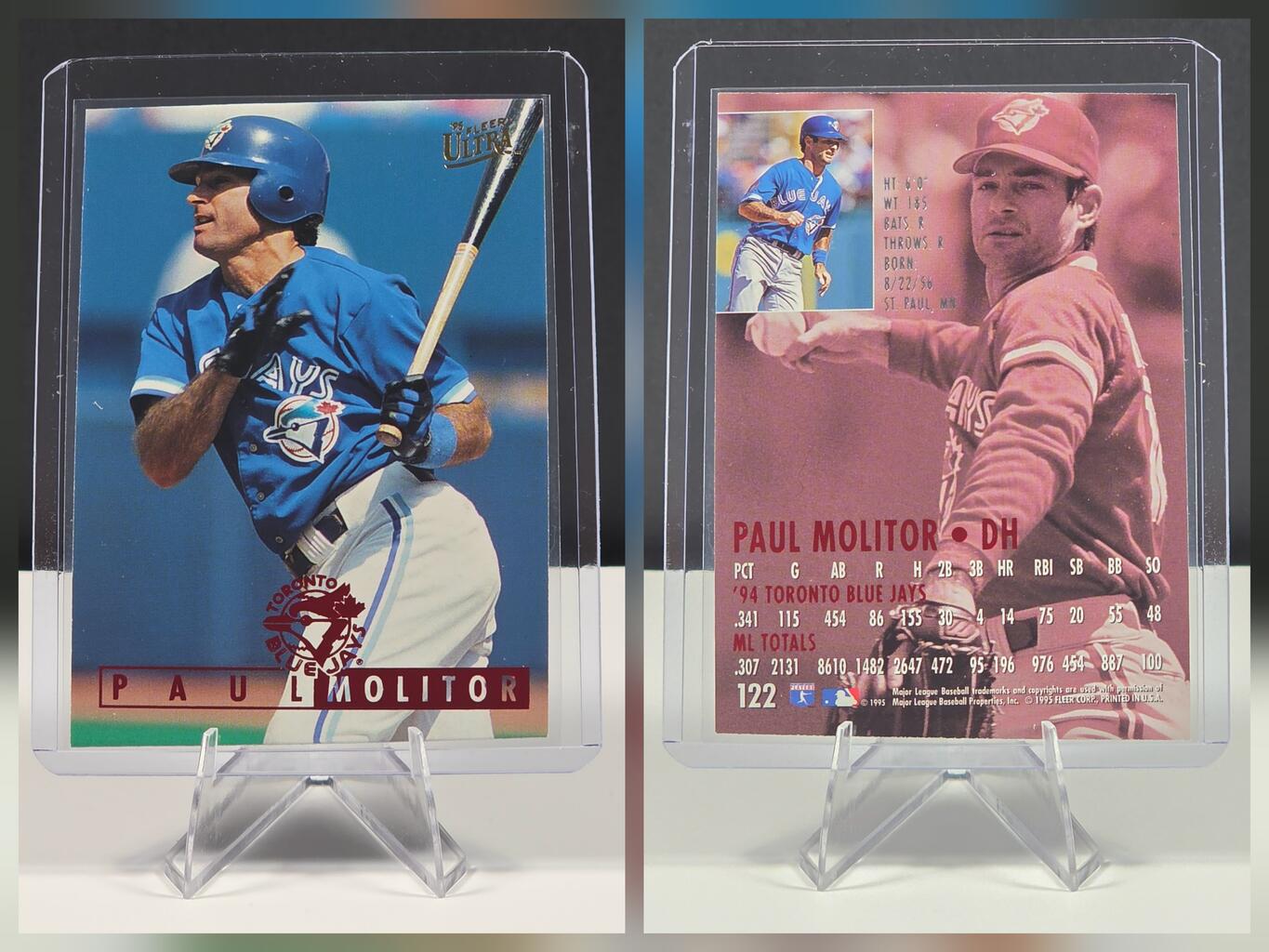
When do we start believing the important parts of our story are behind us?
Paul Molitor was 36 years old when he became a Toronto Blue Jay.
But don't mistake this for a story about someone who had spent his life waiting for success.
Molitor had already found it.
15 YEARS BEFORE TORONTO
Molitor reached the major leagues with the Milwaukee Brewers in 1978.
He became one of baseball's best hitters, made multiple All-Star teams, and helped Milwaukee reach the 1982 World Series.
By the end of 1992, he had spent 15 seasons with the same organization.
That could have been enough for an impressive baseball story.
Then the chapter changed.
Molitor signed with Toronto.
He was 36.
ANOTHER CHAPTER
The Blue Jays were already defending World Series champions when Molitor arrived.
He didn't simply come along for the ride.
In 1993, Molitor hit .332 and collected 211 hits. He finished second in voting for the American League's Most Valuable Player award.
Then came the World Series.
Toronto faced the Philadelphia Phillies.
Across six games, Molitor hit .458 and became one of Toronto's most important players in the series.
The Blue Jays won their second straight championship.
And at 36 years old, after 15 major-league seasons before Toronto, Paul Molitor was named World Series MVP.
But even that wasn't his final meaningful baseball moment.
Three years later, now playing for Minnesota, Molitor collected his 3,000th career hit.
He was 40.
Later had happened again.
👀 LOOK AT THE CARD AGAIN
Look at Molitor wearing a Blue Jays uniform.
This card doesn't show us someone finally becoming successful.
He already was.
It shows us something easier to forget:
A meaningful chapter can end without meaning itself being finished.
Milwaukee mattered.
Toronto mattered.
What came afterward mattered too.
None of those chapters needed to erase the others.
And Molitor couldn't have known exactly what was still waiting when he stepped into a new one.
Neither can we.
💎 HIDDEN GEM — LATER
You don't know which meaningful chapter will be your last.
💭 HIYASAT REFLECTION
Maybe something important in your life has ended.
A career. A role. A relationship. A season. A goal you once built your identity around.
It is okay to recognize what that chapter meant.
But have you mistaken the end of one meaningful chapter for the end of meaningful chapters altogether?
Later is not a promise that something better is coming.
It is simply a reminder:
You haven't read the chapters that haven't happened yet.
Chapter 4 · Woody Williams — MATURITY

When does someone become the person they're capable of becoming?
We like clear moments.
The promotion.
The breakthrough.
The season when everything finally works.
Woody Williams' career makes that harder.
Toronto selected him in the 28th round of the 1988 MLB Draft. Five years later, he reached the major leagues with the Blue Jays.
He had made it.
But he wasn't finished becoming.
MORE THAN ONE ROLE
Williams spent years with Toronto pitching as both a starter and a reliever.
There were good stretches. There were difficult ones.
He was learning how to get major-league hitters out while trying to establish where he fit.
Then, in 1998, the road changed.
Toronto traded him to the San Diego Padres.
It would be easy to look at what happened afterward and treat Toronto as something Williams needed to leave behind.
But look closer.
Toronto wasn't separate from his development.
It was part of it.
THE ROAD KEEPS CHANGING
With San Diego, Williams became more established as a starting pitcher.
Then the road changed again.
In 2001, San Diego traded him to the St. Louis Cardinals.
Williams was already in his 30s.
Yet some of the most notable baseball of his career was still ahead.
In 2003, at age 36, he was selected to his first—and only—Major League All-Star Game.
Ten years had passed since his MLB debut.
So when did Woody Williams actually become the pitcher capable of reaching that All-Star Game?
Toronto?
San Diego?
St. Louis?
There may not be one answer.
Maybe that's the point.
MATURITY
A career develops through more than its biggest moments.
Different roles. Different places. Mistakes. Adjustments. Experience.
None guarantees that someone will eventually succeed.
Time alone doesn't make us better.
But sometimes the experiences that seem ordinary while we're living them become part of who we're still learning to be.
👀 LOOK AT THE CARD AGAIN
Look at Woody Williams on this Toronto Blue Jays card.
Everything it shows you is true.
It just isn't the whole story.
San Diego hadn't happened yet.
St. Louis hadn't happened yet.
His All-Star season hadn't happened yet.
The card captured who he was.
It couldn't show who he was still becoming.
💎 HIDDEN GEM — MATURITY
What you see now may not be the finished version.
A difficult chapter doesn't guarantee something better is coming.
But neither does it give us enough evidence to declare that we've seen everything someone can become.
💭 HIYASAT REFLECTION
Have you judged yourself too early?
Chapter 5 · David Cone — BEGIN AGAIN

Some places become part of your story more than once.
In 1992, David Cone arrived in Toronto already an accomplished pitcher.
The Blue Jays were chasing something they had never won before. Late in the season, they acquired Cone from the New York Mets to strengthen their pitching staff for the final push.
He helped Toronto reach October.
Then the Blue Jays won their first World Series.
It would have been easy to remember Toronto as one remarkable chapter in a much larger career.
Because after that season, Cone left.
THE ROAD KEPT MOVING
His career continued through different cities and different uniforms.
There was another Cy Young Award.
More championships.
And in 1999, Cone threw one of baseball's rarest achievements: a perfect game.
But even remarkable careers change.
The pitcher who once stood on baseball's biggest stages eventually struggled. After pitching for Boston in 2001, Cone spent the entire 2002 season away from Major League Baseball.
He could have stopped there.
Instead, at age 40, he decided to try again.
And the road led somewhere familiar.
TORONTO. AGAIN.
In 2003, eleven years after helping Toronto win its first championship, David Cone returned to the Blue Jays.
But this wasn't 1992.
The team had changed.
Cone had changed.
And this chapter wouldn't end with another championship.
His comeback lasted only a handful of starts before physical problems interrupted it. Soon afterward, his playing career was over.
So why does the return matter?
Maybe because beginning again isn't valuable only when it produces a perfect ending.
Sometimes choosing to begin is part of the story too.
👀 LOOK AT THE CARD AGAIN
Look at David Cone wearing Toronto across his chest.
The card captures one Blue Jays chapter.
It couldn't show what was still ahead—the teams, awards, championships, perfect game, struggles, time away from baseball, or the unlikely return to Toronto years later.
The card stayed the same.
The story around it kept growing.
And when Cone returned, he wasn't going backward.
He was beginning from somewhere new.
💎 HIDDEN GEM — BEGIN AGAIN
Beginning again doesn't mean going back. It means moving forward from where you are now.
💭 HIYASAT REFLECTION
Is there somewhere in your life you're trying to return to, when what you really need is a new beginning?