The road to where you belong isn't always the shortest one.
The five stories
Chapter 1 · Bobby Hurley — THE DETOUR
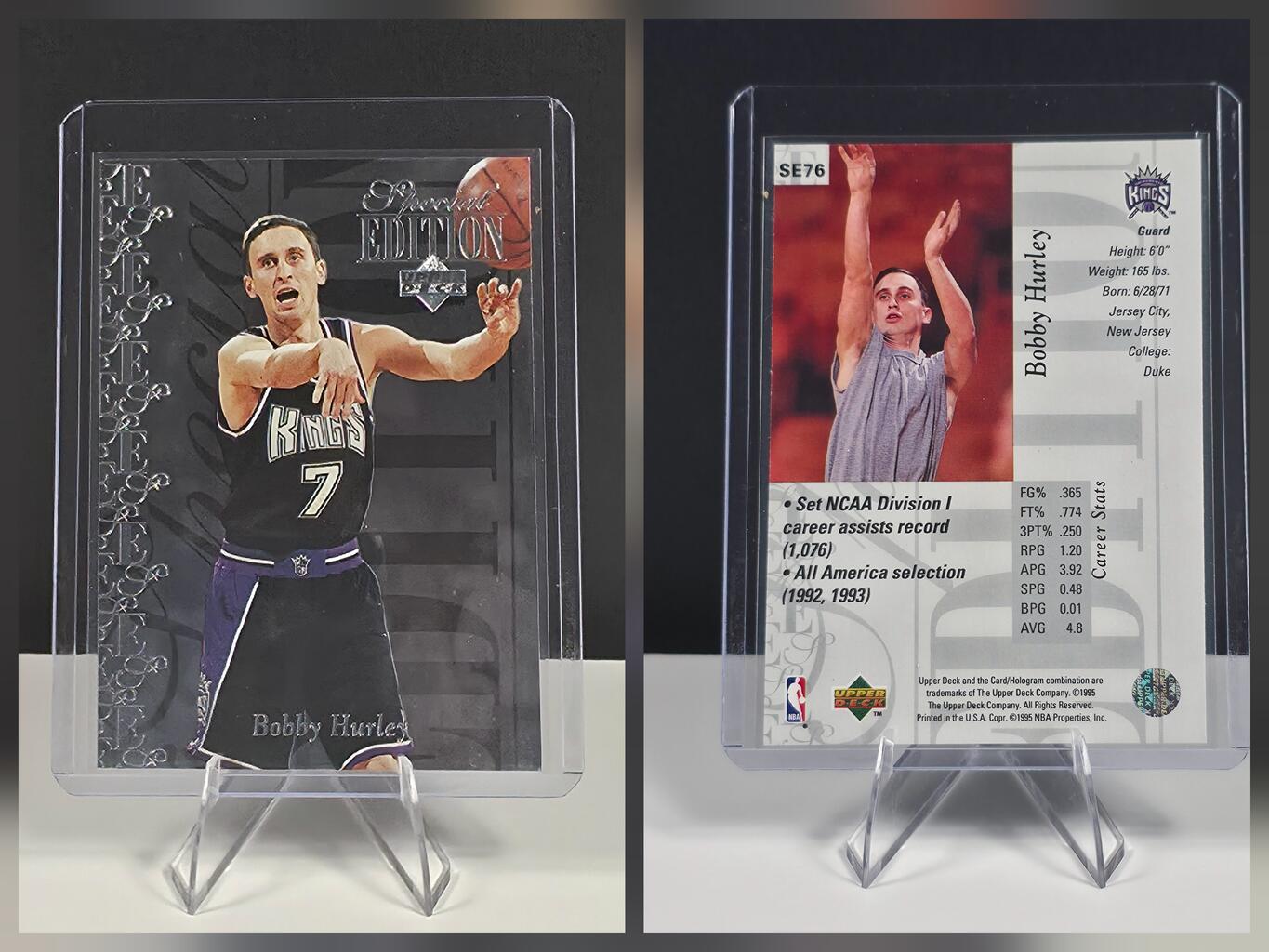
At 22 years old, Bobby Hurley was living the dream he had worked toward almost his entire life.
He had won two national championships at Duke and become one of college basketball's best point guards. In 1993, the Sacramento Kings selected him seventh in the NBA Draft.
He had made it.
Then, only months later, everything changed.
Bobby was badly injured in a devastating car accident. Suddenly, basketball didn't matter. Winning didn't matter.
He just wanted to live.
And Bobby did.
ONE MORE STEP
Surviving was only the beginning.
There was no promise Bobby would become the player he had been before. But he kept working. He kept recovering. He kept moving.
The next season, Bobby stepped onto an NBA court again.
He came back.
His NBA career never became what many once expected. Sometimes we give everything we have and the old dream still doesn't come back.
That's when another kind of courage is needed:
The courage to stop asking, “Why can't my life be what it was?”
And begin asking, “What can my life become now?”
A NEW WAY FORWARD
Years later, basketball opened another door.
Bobby became a coach.
In 2013, he became head coach at Buffalo. Two years later, he led the school to its first NCAA Tournament.
The young man who once chased his own basketball dream was now helping others chase theirs.
He didn't get his old road back.
He found another road forward.
👀 LOOK AT THE CARD AGAIN
Look at Bobby Hurley on this card.
He couldn't see the accident ahead. He couldn't see the difficult comeback. And he couldn't see the life basketball would eventually give him beyond playing.
Neither can we see everything waiting on our road.
We make plans. We build dreams.
Then life changes something.
That doesn't mean the story is over.
Bobby's road would change again, including the end of his long coaching chapter at Arizona State in 2026.
His journey reminds us that we are more than the plan that didn't work.
Sometimes we don't need to see the entire road.
We just need to take the next step.
💭 HIYASAT REFLECTION
The road to where you belong isn't always the shortest one.
If you're facing a detour, don't mistake it for the end.
You may not be able to change what happened.
But you can still decide: What will I do next?
Your road is still being written.
Keep moving forward.
Chapter 2 · Mario Elie — PERSISTENCE
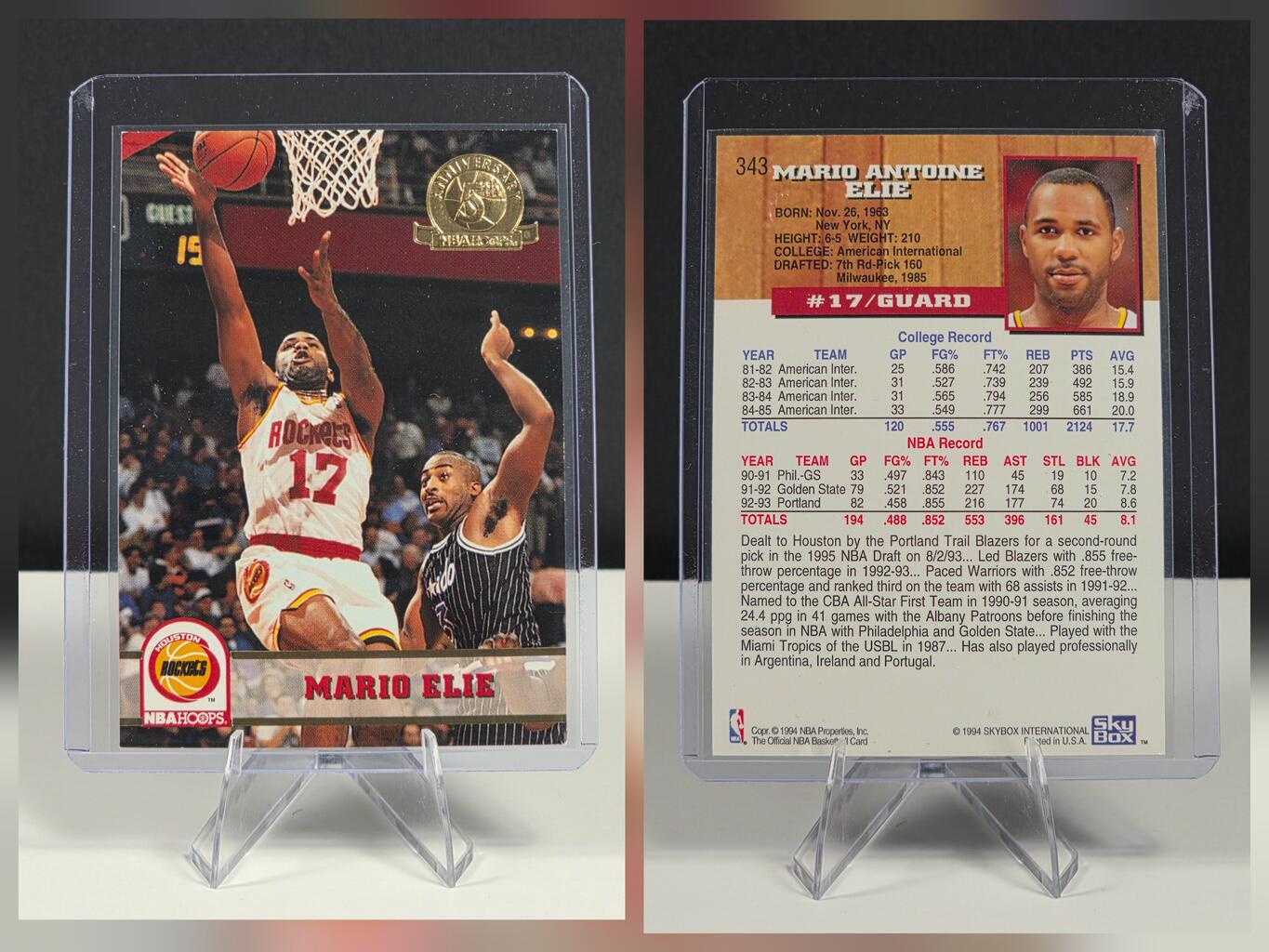
Mario Elie was drafted into the NBA in 1985.
But being drafted didn't mean he had made it.
Selected late in the seventh round, Elie didn't immediately earn a place in the league. Instead, basketball took him almost everywhere except where he wanted to be.
He played in smaller leagues and overseas.
Different teams. Different countries. Different opportunities.
The NBA remained somewhere in the distance.
KEEP SHOWING UP
Years passed.
Elie could have decided the opportunity had passed with them.
Instead, he kept playing.
He kept improving.
He kept showing up wherever basketball gave him another chance.
Finally, in 1990, at 26 years old, Elie reached the NBA.
Five years had passed since he was drafted.
Even then, there was no guarantee he would stay.
But Elie gradually became the kind of player winning teams value — tough, dependable, and willing to do work that doesn't always make the headlines.
Eventually, that long road brought him to Houston.
WHEN THE MOMENT CAME
With the Rockets, Elie became an NBA champion in 1994.
Then came May 1995.
Houston was facing Phoenix in Game 7 of the Western Conference Semifinals. Late in the game, Elie received the ball in the corner and hit a three-pointer that helped send Houston forward.
He turned toward the Phoenix crowd and blew a kiss.
The moment became known as the “Kiss of Death.”
Houston went on to win another championship.
The player who had spent years trying to reach the NBA had delivered when an entire season was on the line.
Elie later won a third championship with San Antonio in 1999 and eventually moved into coaching.
👀 LOOK AT THE CARD AGAIN
Look at Mario Elie on this card.
You see an NBA player.
But the card can't show you all the places he had to play before getting there.
It can't show the years of uncertainty.
Or all the times he had to keep going without knowing whether the NBA opportunity would ever come.
That's what makes this card different once you know the story.
💭 HIYASAT REFLECTION
Sometimes persistence isn't one heroic moment.
Sometimes it's simply refusing to stop.
Another practice.
Another team.
Another opportunity.
Another year.
Mario Elie's road wasn't short.
But when his moment finally came, he was still there.
KEEP SHOWING UP.
Chapter 3 · Detlef Schrempf — THE ADJUSTMENT
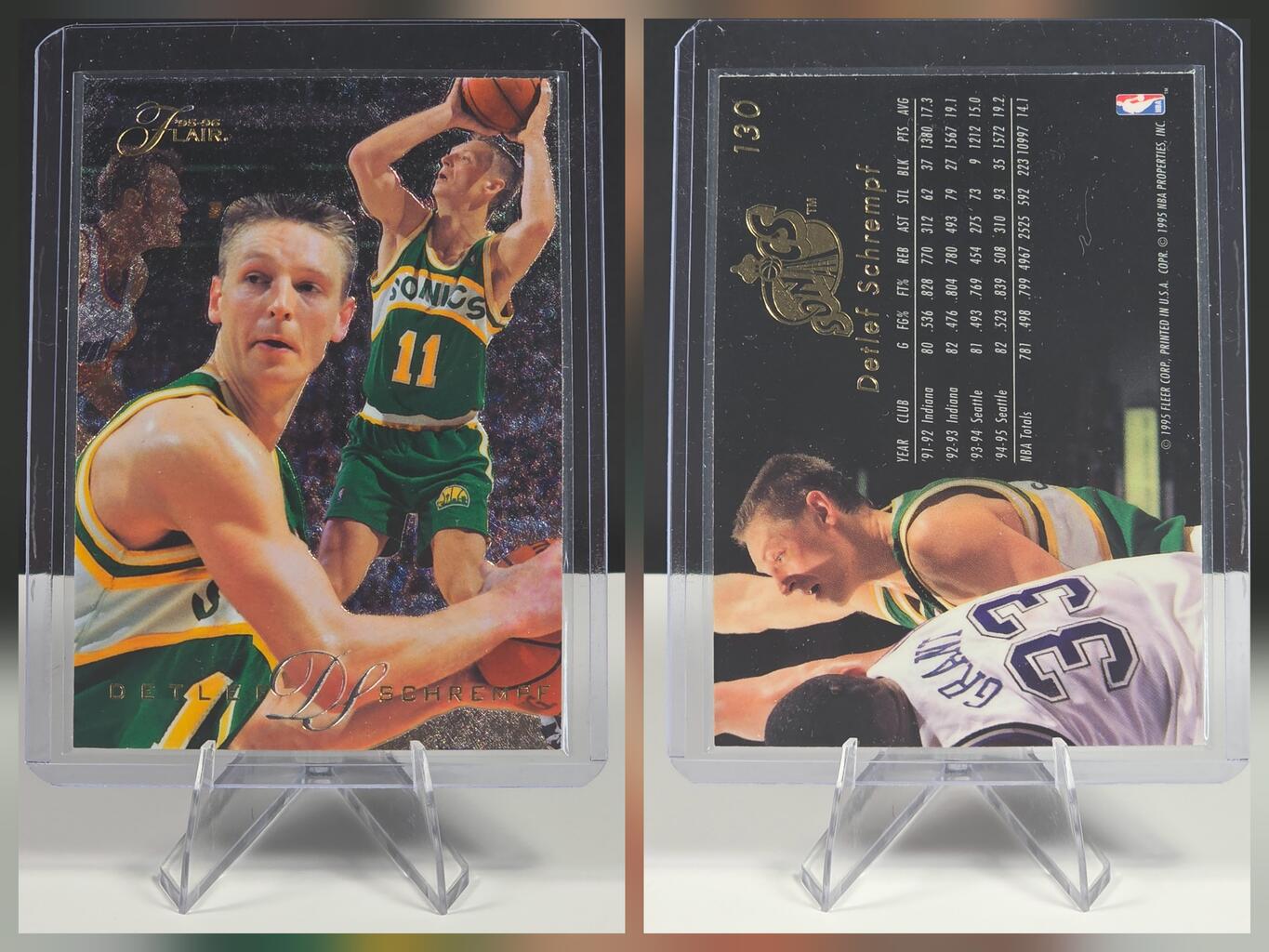
The card shows Detlef Schrempf as an established NBA player.
Confident. Experienced. Belonging.
What it cannot show is how far he traveled or how many times he had to adjust to become that person.
LEARNING A DIFFERENT GAME
Schrempf grew up in West Germany and came to the United States as a teenager.
Suddenly, basketball wasn't the only thing he had to learn.
There was a different language and culture. A different school. A different way of life.
He spent his senior year of high school in Washington state before attending the University of Washington, where he developed into one of the country's best college players.
In 1985, the Dallas Mavericks selected him eighth overall in the NBA Draft.
At 22 years old, the kid from Germany had reached the NBA.
But arriving somewhere doesn't always mean you've found where you belong.
WHEN THE ROLE CHANGED
Schrempf spent his first NBA seasons in Dallas before being traded to the Indiana Pacers in 1989.
And there, something unexpected happened.
His career began to flourish coming off the bench.
For a former top ten draft pick, becoming a reserve could have looked like a step backward.
Instead, Schrempf made the role his own.
He became one of the league's most valuable reserves, winning the NBA Sixth Man of the Year Award twice.
Then his role changed again.
Schrempf became a starter.
Then an NBA All Star.
Eventually, he returned to Washington state with the Seattle SuperSonics, helping them reach the 1996 NBA Finals.
Again and again, the circumstances changed.
Schrempf kept changing with them.
👀 LOOK AT THE CARD AGAIN
Look at Detlef Schrempf on the card.
You are looking at one finished moment.
The card cannot show the teenager leaving Germany.
It cannot show the unfamiliar classrooms, the cultural adjustments, the trade from Dallas or the decision to embrace a different NBA role.
It cannot show all the versions of himself he had to become along the way.
A sports card freezes a player in one moment.
A life rarely stays there.
💭 HIYASAT REFLECTION
Sometimes we resist change because it feels like losing ground.
A different job. A smaller role. An unexpected move. A plan that no longer works the way we imagined.
But adjustment isn't always surrender.
Sometimes the new role teaches us something the old one couldn't.
Sometimes the unfamiliar place becomes the place where we grow.
Detlef Schrempf's journey reminds us that moving forward doesn't always mean holding tightly to the path we originally imagined.
Sometimes the road forward appears only after we become willing to adjust.
Chapter 4 · Clyde Drexler — BREAKTHROUGH
ALMOST
Before Clyde Drexler became an NBA champion, he became very familiar with getting close.
At the University of Houston, Drexler helped lead the famous Phi Slama Jama teams to the 1983 NCAA championship game.
With the score tied 52–52 in the final seconds, NC State's Lorenzo Charles caught Dereck Whittenburg's missed shot and dunked it home.
Houston lost 54–52.
One play separated Drexler from a championship.
It would not be the last time.
Years later, Drexler became the face of the Portland Trail Blazers. He was an All-Star, an elite scorer, and one of basketball's most spectacular players.
Portland reached the NBA Finals in 1990.
They lost to Detroit.
They returned in 1992.
They lost to Chicago.
Drexler had already proven he belonged among the game's best. He had even won Olympic gold with the legendary 1992 Dream Team.
But the championship he had chased for so long remained missing.
THE ROAD CHANGED
By 1995, Drexler was 32.
Instead of finishing his career where he had spent more than a decade, Portland traded him to the Houston Rockets.
Houston was home.
It was also where his old college teammate Hakeem Olajuwon was waiting.
The defending champions entered the playoffs as the sixth seed. Their road was anything but easy: Utah, Phoenix, San Antonio, then Orlando in the NBA Finals.
Drexler had spent years getting close.
This time, he finished the journey.
Houston swept Orlando, and Clyde Drexler finally became an NBA champion.
Twelve years after the heartbreak of the 1983 NCAA championship game, he had returned to Houston and reached the ending that had escaped him for so long.
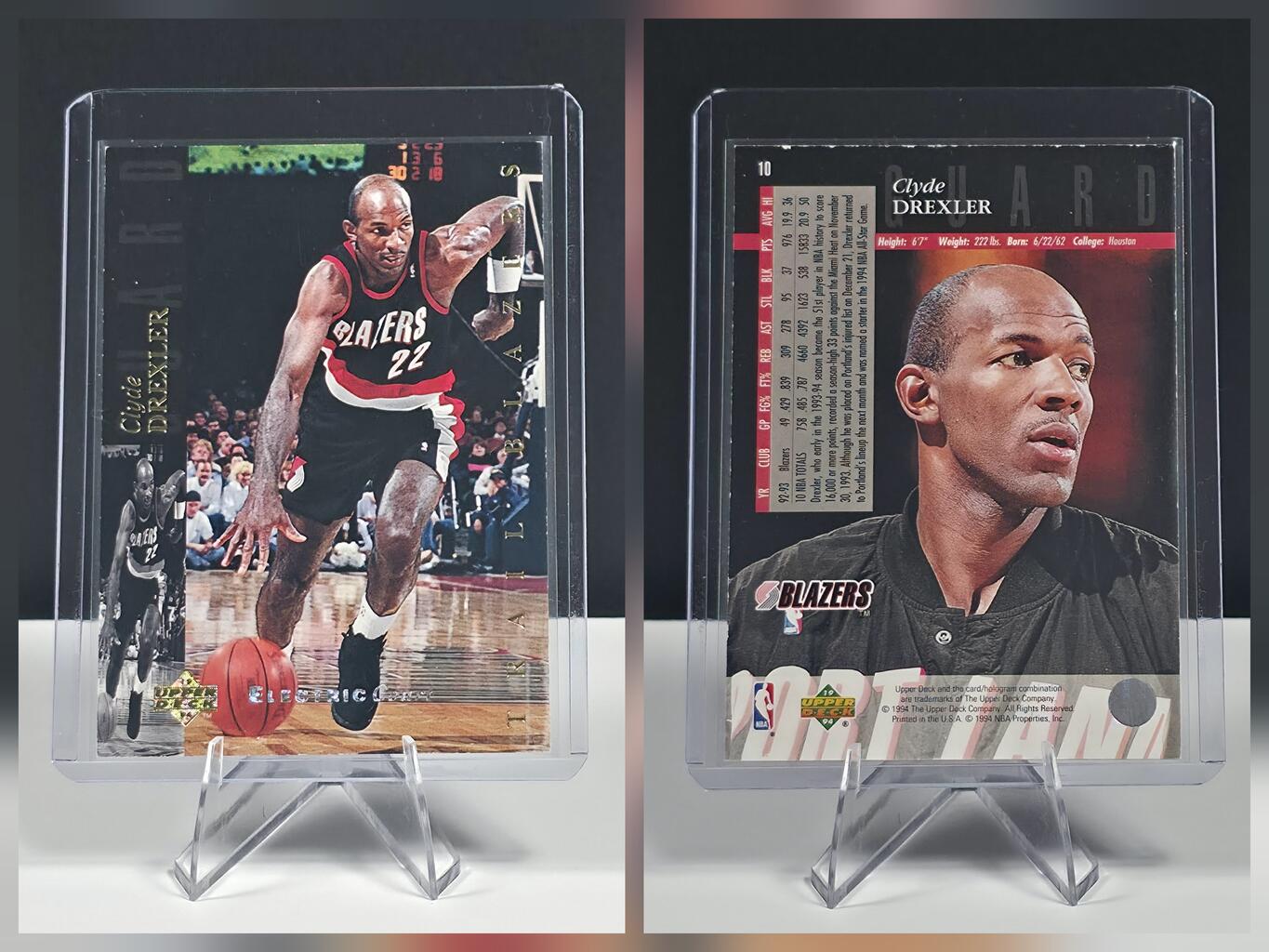
👀 LOOK AT THE CARD AGAIN
Now look at the card.
It captures Drexler in Portland—the place where he became Clyde the Glide, where he built his reputation, and where he came painfully close.
That is what makes this card meaningful.
It does not show the championship.
It shows the man before the breakthrough.
The years when the work was already worthy, even though the ending had not arrived yet.
💭 HIYASAT REFLECTION
Sometimes we mistake "almost" for failure.
But a road can contain disappointment without being the wrong road.
Drexler's journey went through Houston, Portland, two NBA Finals losses, Olympic gold, and eventually back to Houston again.
The breakthrough did not erase everything that came before it.
Everything that came before it prepared him for the moment when "almost" finally became enough.
Chapter 5 · David Robinson — PURPOSE
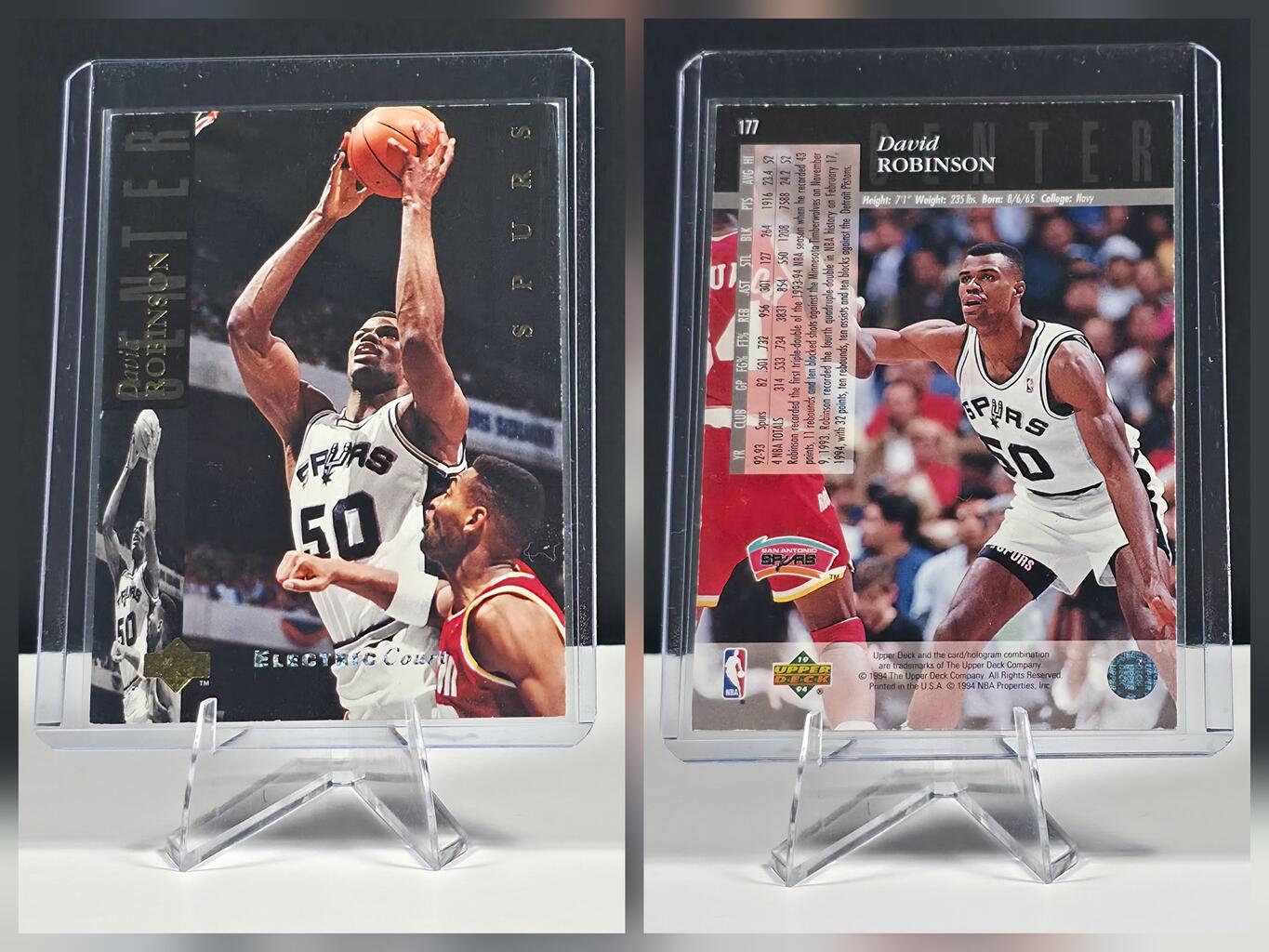
David Robinson had reached almost every destination basketball could offer.
NBA MVP. Scoring champion. Defensive Player of the Year. Olympic gold medalist. Two-time NBA champion. Hall of Famer.
But his story may be most meaningful when we ask a different question:
What did he do with everything success gave him?
THE ROAD HAD TO WAIT
Robinson didn't arrive at the U.S. Naval Academy as a future NBA superstar.
He went there for an education and a path of service. Then he grew, his basketball ability exploded, and suddenly the NBA was waiting.
San Antonio selected him No. 1 overall in 1987.
Robinson still had a commitment to fulfill.
So the NBA waited.
He finally joined the Spurs in 1989 and quickly became one of basketball's best players.
But individual greatness didn't immediately bring a championship.
Then injuries limited Robinson to six games in 1996–97. San Antonio collapsed to 20 wins—and the resulting draft lottery eventually brought Tim Duncan to the Spurs.
MAKING ROOM
Robinson had spent years being the center of San Antonio basketball.
Now another great player was arriving.
Instead of fighting to keep everything centered on himself, Robinson made room.
Together, Robinson and Duncan won the 1999 NBA championship.
Four years later, Robinson finished his career with another title, collecting 13 points and 17 rebounds in his final NBA game.
But another part of his legacy was already being built.
SOMETHING BIGGER
Robinson and his wife, Valerie, invested deeply in education, including founding the Carver Academy in San Antonio.
Basketball had given Robinson money, recognition and influence.
He found ways to make those things useful to others.
And perhaps that's where achievement becomes purpose.
👀 LOOK AT THE CARD AGAIN
This card shows one of basketball's great centers.
But the cardboard can't show everything that came afterward.
The students.
The opportunities.
The community.
The lives touched by what basketball made possible.
That's why David Robinson closes THE LONG WAY FORWARD.
The first four cards ask how we keep moving forward.
The fifth asks why.
💭 HIYASAT REFLECTION
Success doesn't have to end with what we receive.
Sometimes what we achieve becomes something we can give.
So when you finally reach the place you've been working toward, there may be one more question waiting:
Who can you help move forward too?
The destination matters. What you do after you arrive matters more.